Silk garments leave our pressing table smooth, but folding and shipping inevitably introduce creases. Most are shallow packing wrinkles that lift with a quick pass of steam, so there is no need to iron the entire garment.
| What you are treating | Best place to start |
|---|---|
| Light wrinkles on a silk dress or blouse | Gentle steaming |
| A sharp fold, collar, or cuff | Low-heat ironing |
| Structured, embellished, or dry-clean-only silk | Follow the care label or use professional pressing |
Read the Care Label Before You Iron or Steam
If the iron symbol on the care label is not crossed out, the garment can be ironed. The dots inside the symbol indicate the maximum soleplate temperature: one dot means 120°C, two dots mean 160°C, and three dots mean 210°C. For plain silk satin, 120°C is usually enough. A crossed-out steam symbol means do not steam the garment, even if the silk fiber itself could tolerate it.
One point deserves extra attention: silk fiber may tolerate steam even when the finished garment does not. Fusible interfacing, pigment prints, and beaded panels can all be damaged before the silk itself shows any reaction.
Can You Steam Silk?
Yes. Most plain, unembellished silk garments respond well to steaming, and it is one of the easiest ways to treat light wrinkles.
Steam relaxes fine wrinkles without flattening the fabric, so the garment keeps its intended drape. This works well for dresses, blouses, robes, camisoles, and other styles where drape matters more than a crisp edge.
How to Steam Silk
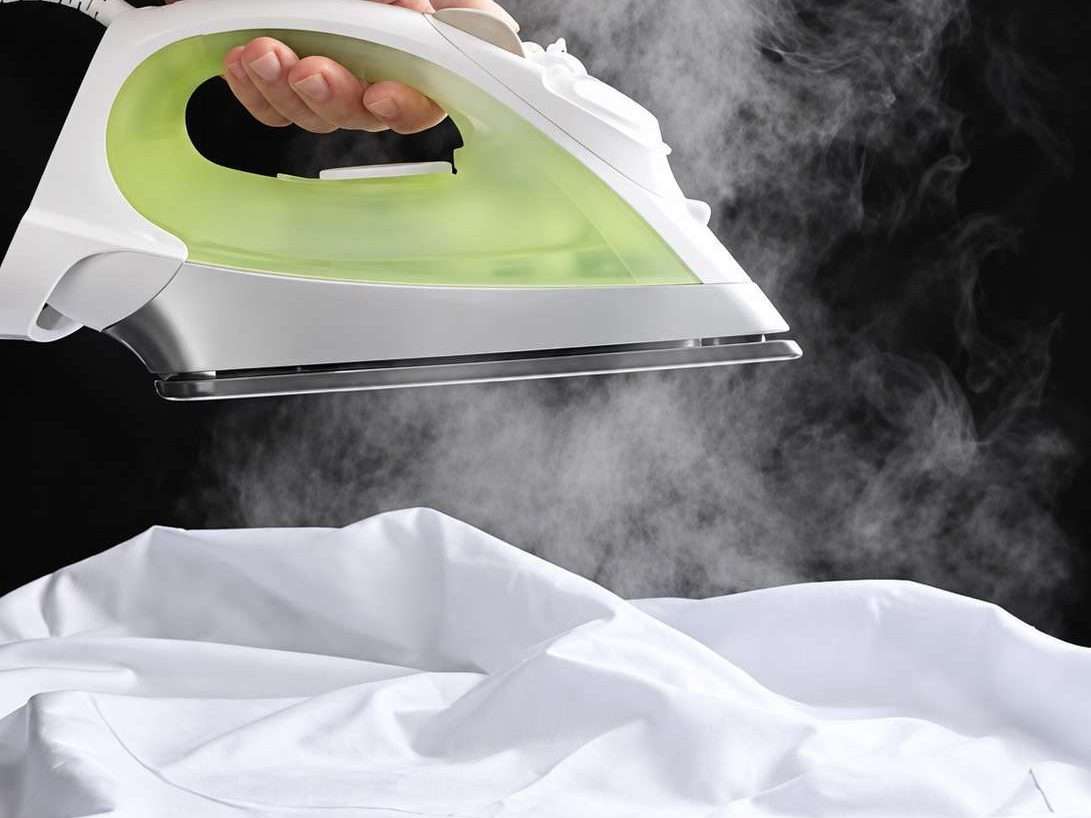
- Let the steamer heat fully and test it away from the garment. If it spits water, wait until it produces a clean, steady flow of steam.
- Hang the garment on a hanger wide enough to support the shoulders. Avoid narrow wire hangers while the fabric is warm and relaxed, as they may distort the shoulder line.
- Hold the steam head 2 to 5 cm from the surface and move it slowly over the wrinkle. Keep it moving, and do not press it against the silk.
- Leave the garment hanging until it is completely cool and dry, then check the result.
Check the fabric before making a second pass. Light packing wrinkles should improve visibly after one pass. If a crease has not changed at all, repeating the same treatment is unlikely to help.
Stop immediately if the fabric becomes noticeably wet, its sheen changes, or the surface starts to look uneven. Let it dry completely before doing anything else. Continuing to work on warm, damp silk can turn a temporary mark into a permanent one.
Can You Iron Silk?
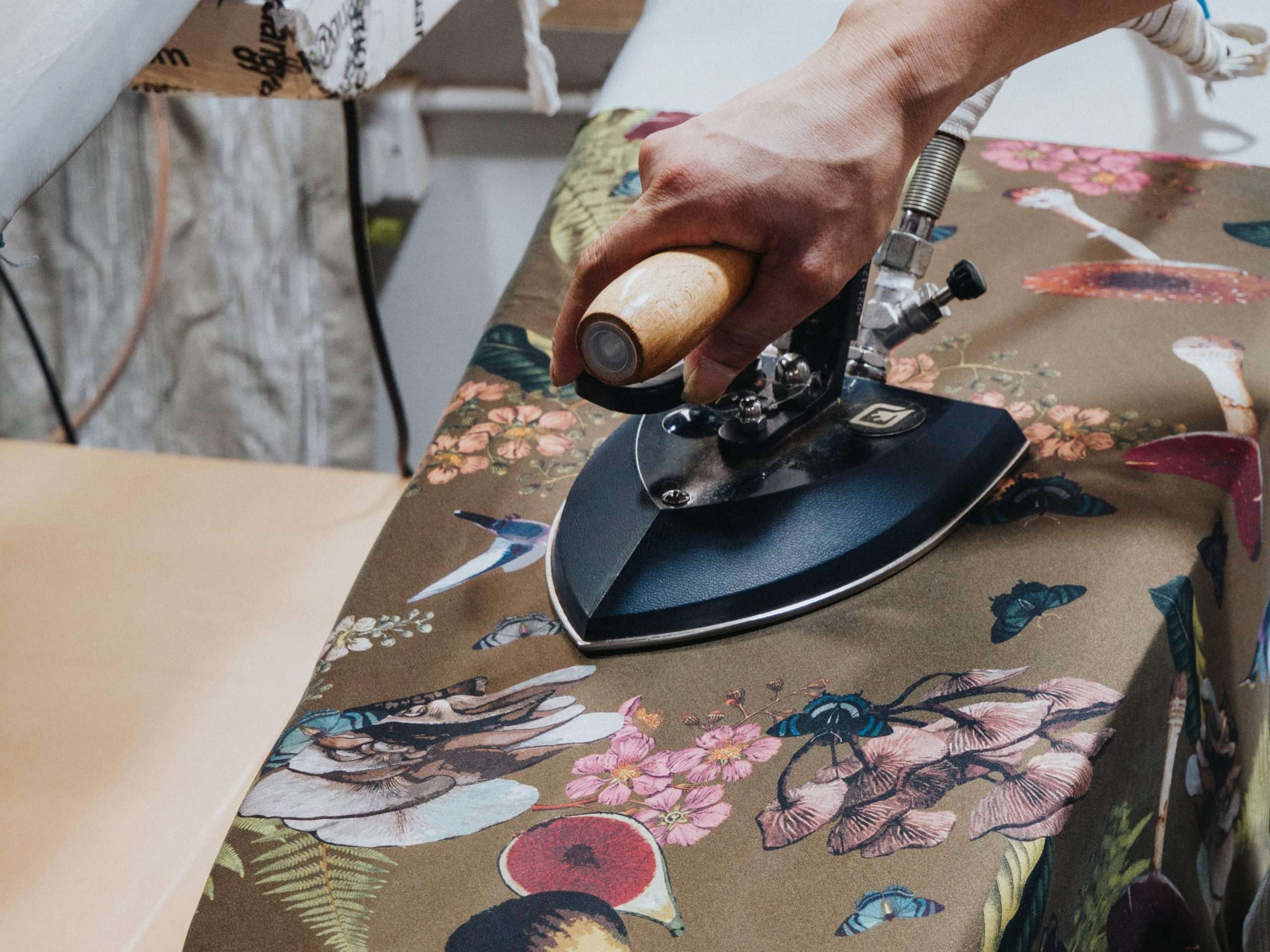
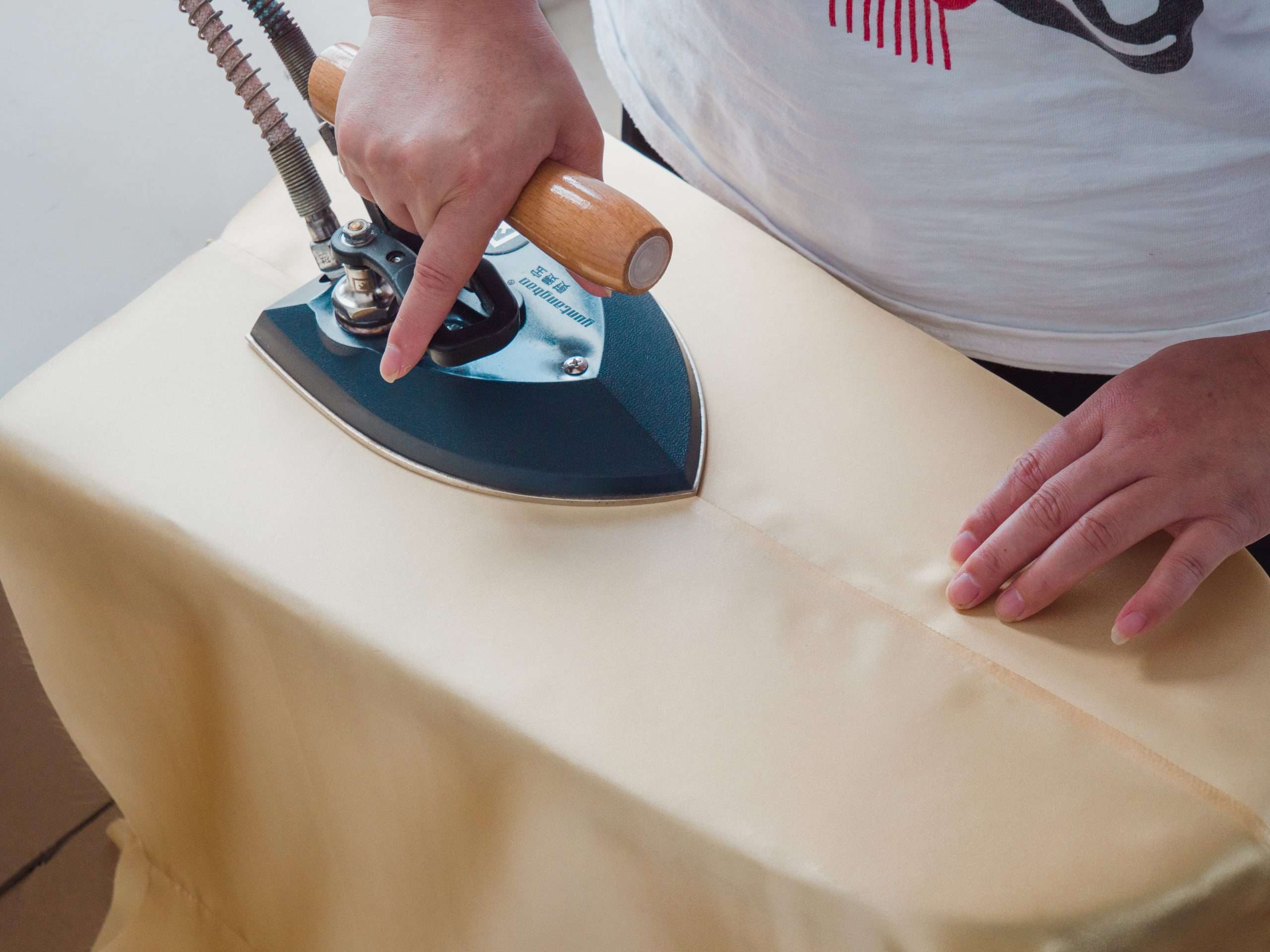
Plain silk satin items, including pillowcases and dresses, can generally be ironed if the care label allows it. An iron provides the pressure and precision a steamer cannot, which is useful for shirt collars, cuffs, button plackets, and hems that need to lie flat.
Turn the garment inside out and place a clean, thin cotton pressing cloth between the iron and the silk. Silk organza is an excellent alternative because it withstands heat while remaining transparent enough to see the area underneath.
Set the iron to 120°C. A higher momme does not require more heat: 16- and 22-momme silk satin are made from the same type of silk fiber. The heavier fabric is simply thicker, not more heat-resistant.
If you are new to ironing silk, work quickly in small sections. Lower the iron, hold it briefly, lift it, and move to the next area. Do not slide it back and forth: dragging a hot soleplate over silk can distort the weave and leave a shiny patch on the face.
If the crease remains, do not raise the temperature. Replace the dry pressing cloth with a slightly damp one; a small amount of moisture is safer than pressing harder and risking a permanent mark.
Steam or Iron: Which Should You Use?
Neither method is universally better. Steam removes light wrinkles quickly and gently, while an iron handles sharp creases and sets crisp edges. The right choice depends on the garment and the type of crease.
How to Get Wrinkles Out of a Silk Dress
A silk dress is easiest to steam while it is hanging.
Do not pull the skirt taut while steaming. This is especially important with bias-cut dresses, where the natural hang of the fabric is part of the design. If a bias-cut skirt is stretched while warm and damp, it may dry in that position and become difficult to restore.
For a simple slip dress or a single-layer silk dress, one quick steaming pass is usually enough.
Use extra care when a dress has a structured bodice, pleats, heavy embroidery, glued embellishments, or a complex lining. The outer silk may tolerate heat that another component cannot. Steam only the plain silk panels, keep the head away from trims, and leave valuable garments to a professional cleaner.
Why Satin Shows Creases More Than Crepe de Chine
Silk charmeuse and satin have a smooth, reflective surface. That sheen looks luxurious, but it also catches the light at every crease. A fold that barely shows on another fabric may be obvious on satin.
Silk crepe de chine has a fine, irregular texture created by highly twisted yarns. Its matte surface makes small wrinkles less noticeable.
Neither fabric is wrinkle-proof. Both will crease under the same folding pressure; the difference is how visible those creases are. If wrinkle visibility matters to your product, we recommend handling and folding fabric swatches before placing a bulk order.
Every silk garment we ship is pressed and inspected before packing. Folding and transport inevitably create some pressure, so a few soft creases after unpacking are normal and should lift with a quick pass of steam. A hard-set fold, shine mark, or distorted seam is not normal; photograph and report the problem instead of pressing it harder.
What to Do If Steam Leaves Water Marks
Stop steaming and let the silk dry naturally.
A damp patch looks darker than the surrounding fabric, so a fresh water mark often appears worse than it really is. Most marks disappear as the moisture evaporates.
Do not rub the damp area or add more steam in an attempt to blend the edges. Either action may make the problem worse.
Removing Silk Wrinkles Without a Steamer or Iron
For light packing wrinkles, hanging the garment properly may be all you need.
Take the garment out of your suitcase as soon as you arrive, place it on a wide hanger with room around it, and leave it for a few hours. At normal room temperature and humidity, silk gradually relaxes under its own weight. This will not remove a deep crease, but it costs nothing and involves no heat, so it is worth trying first.
You may also see advice to hang silk in a steamy bathroom. Humidity can relax the fibers, but you cannot control the amount of moisture or where condensation lands. Water dripping onto silk can leave the marks described above, so we would not use this method on an expensive or special-occasion garment. A handheld steamer is inexpensive compared with the garment and gives you far more control.
How to Keep Silk from Wrinkling Again
Silk is not wrinkle-resistant, but careful storage can make a noticeable difference.
Give dresses and blouses room in the wardrobe rather than compressing them between heavy coats. Pressure over time sets creases.
When you travel, unpack silk first. A garment left folded in a suitcase for a week will crease far more than one left overnight.
Do not wring silk after washing. Twisting forces sharp folds into wet fibers, and damp silk takes a set more easily. Let it dry naturally in a shaded, well-ventilated place.
Practices to Avoid
The following practices can permanently damage a silk garment:
- Running the iron above the care label’s limit
- Pressing directly onto beading, sequins, glued trim, or a pigment print
- Wetting the same area repeatedly to chase a mark
- Assuming heavier silk needs a hotter iron
One more point to remember: “100% silk” describes the fiber content, not every component of the garment. The lining, print, coating, embroidery, interfacing, and trim may each have a different heat limit. If you are unsure, ask the seller.
Final Thoughts
How visible wrinkles are depends more on the fabric construction and finish than on the word “silk” alone. Satin shows every fold, crepe de chine hides many small wrinkles, and sandwashed silk falls somewhere in between. If you are developing silk products, we can send swatches of all three for you to fold, hang, and compare under realistic conditions. Tell us what you are developing, and we will put together the relevant samples.
Frequently Asked Questions
Can you steam silk?
Yes, most plain silk garments can be steamed, as long as the care label does not carry a crossed-out steam symbol. Keep the steam head 2 to 5 cm away from the fabric, keep it moving, and let the garment hang until it is completely cool and dry before checking the result.
What iron temperature is safe for silk?
Follow the dots on the care label: one dot means a maximum soleplate temperature of 120°C, two dots mean 160°C, and three dots mean 210°C. For plain silk satin, 120°C is usually enough, and a steam iron can be used. Use a pressing cloth and iron from the wrong side.
How do you get wrinkles out of a silk dress?
Hang it on a wide hanger and steam from the shoulders downward, letting the fabric relax under its own weight. Do not pull the skirt taut, especially on a bias-cut dress, because tension on warm, damp silk can distort the hang permanently.
Does steaming silk leave water marks?
It can, if the steamer spits water or the fabric gets genuinely wet. Stop steaming and let the area dry on its own before judging it, because damp silk always looks darker than the fabric around it. Most fresh marks disappear as the moisture leaves.
Do heavier silks wrinkle less than lighter ones?
Weight matters less than surface. A flat, reflective satin or charmeuse shows folds clearly at any momme, while crepe de chine hides small wrinkles in its texture. No silk is wrinkle-proof; the fabric only changes how visible the creasing is.