Yes, silk shrinks. A silk shirt that fits today can come back from the wash noticeably shorter, and most of that change arrives in a single cycle rather than creeping up over a year.
How much you lose depends on four things: the construction of the fabric, whether it was pre-shrunk before cutting, the water temperature, and how it was dried. Control the drying and the change is usually small enough to ignore. Put silk through a hot dryer and you can lose 5% or more, along with the sheen that made you buy it.
We weave, cut, press and ship silk every day from our factory in China.
Table of Contents
- Does Silk Shrink in Cold Water, Hot Water or the Machine?
- Does Silk Shrink in the Dryer?
- How Much Does Silk Shrink?
- How to Prevent Silk From Shrinking
- Can You Fix Shrunken Silk?
- Does Steaming or Ironing Shrink Silk?
- Why Silk Shrinks, and What Else Changes in the Wash
Does Silk Shrink in Cold Water, Hot Water or the Machine?
All three can. Cold water with gentle handling changes the least, and the risk climbs as you add heat and machine action.
Cold water slows the relaxation process and keeps dyes stable. Hot water accelerates both, which is why a hot cycle can deliver shrinkage and colour bleeding in one go. Machine washing adds the second variable: tumbling, friction between the drum and the fabric, and a spin cycle that stretches wet silk in one direction while pressing it flat in another.
We recommend checking the care label before washing. Under GINETEX labelling guidance, the number inside the wash tub is the maximum washing temperature, a crossed-out tub prohibits domestic washing, and the symbols are set by the most sensitive component of the finished article, including dyes, finishes, accessories and applied details. A silk dress can be dry-clean only because of its lining, beading or interlining rather than the silk itself.
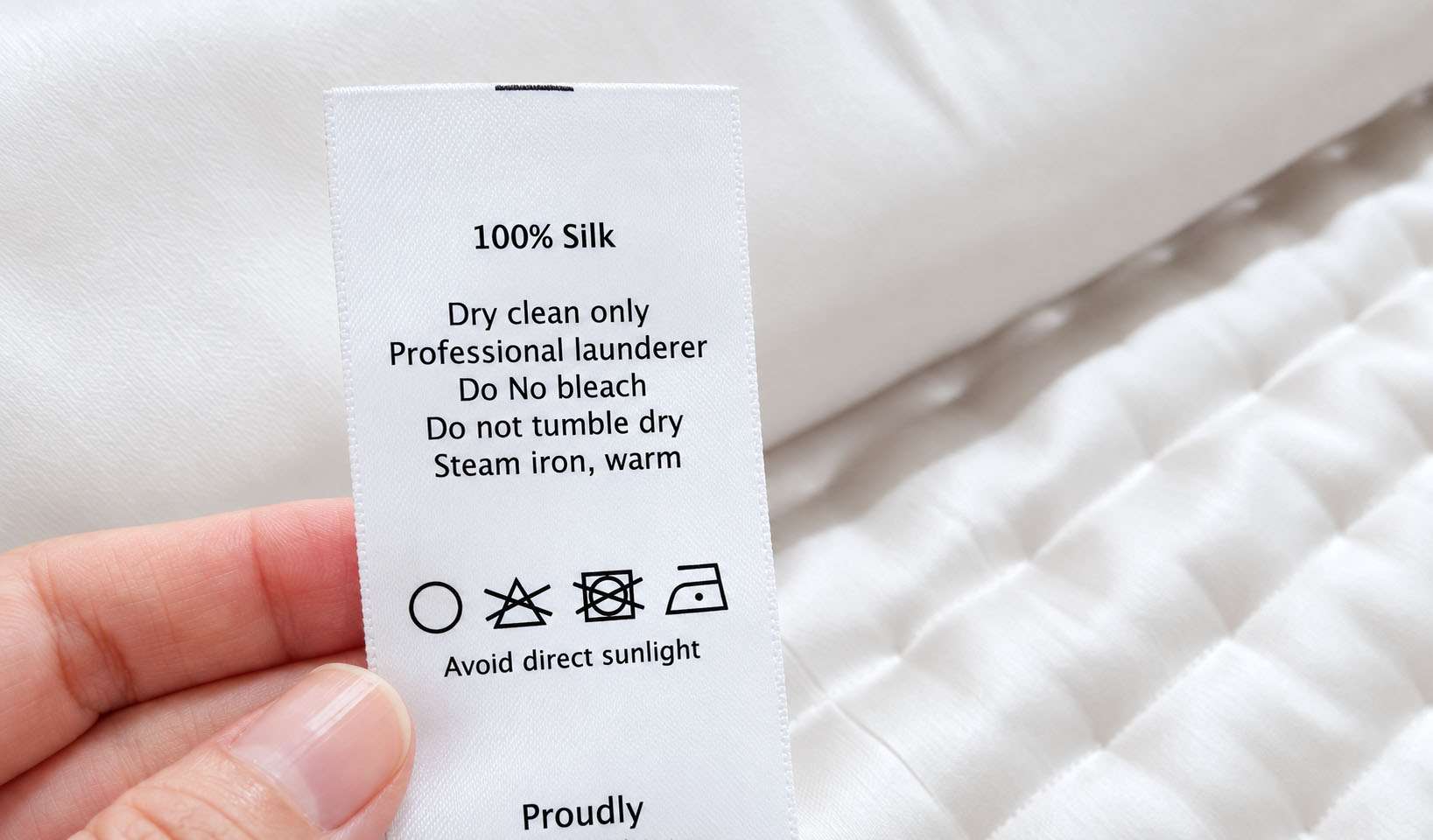
Named product instructions show how specific this gets. Slip permits machine washing its silk pillowcase on a delicate cycle at up to 30°C / 86°F with a pH-neutral liquid detergent and a delicates bag, restricts its sleep masks to handwashing, and directs users to air-dry in shade, never tumble dry, and press or steam the pillowcase on low heat. All three products are silk, and the product decides what each one can take.
Does Silk Shrink in the Dryer?
This is where most silk is lost. Heat and tumbling arrive together, and they do different kinds of damage.
The figures below are the ones we work with for pre-shrunk silk satin. They come from planning work, so treat them as directional. Listing a low-heat row does not mean we recommend tumble drying.
| Conditions | Further shrinkage reference | Risk |
|---|---|---|
| Cold wash + air drying | About 0-2% | Low |
| Cold wash + low-heat tumble drying | About 1-3% | Moderately low |
| Medium-heat tumble drying | About 2-5% | Moderately high |
| High heat / prolonged tumble drying | Possibly over 5% | High; not recommended |
| Repeated tumble drying | Varies between cycles, damage accumulates | Very high |
Percentages feel abstract until you convert them. Take a garment measuring 70 cm in length: 2% removes about 1.4 cm, 3% removes about 2.1 cm, and 5% removes about 3.5 cm. Loose sleepwear absorbs 2% without complaint. At 3%, a fitted shirt, a dress or a pillowcase already reads wrong.
The number alone does not describe the damage:
- Warp and weft rarely move together. Garment length can drop visibly while chest width barely changes. Always state which direction you measured when you quote a shrinkage figure.
- Components shrink at their own rates. Fabric, zippers, sewing thread, interlining, lace, elastic and binding respond differently, which produces wavy plackets, twisted side seams, uneven hems, buckling around zippers, puckered pillowcase edges and rippling at collars and cuffs.
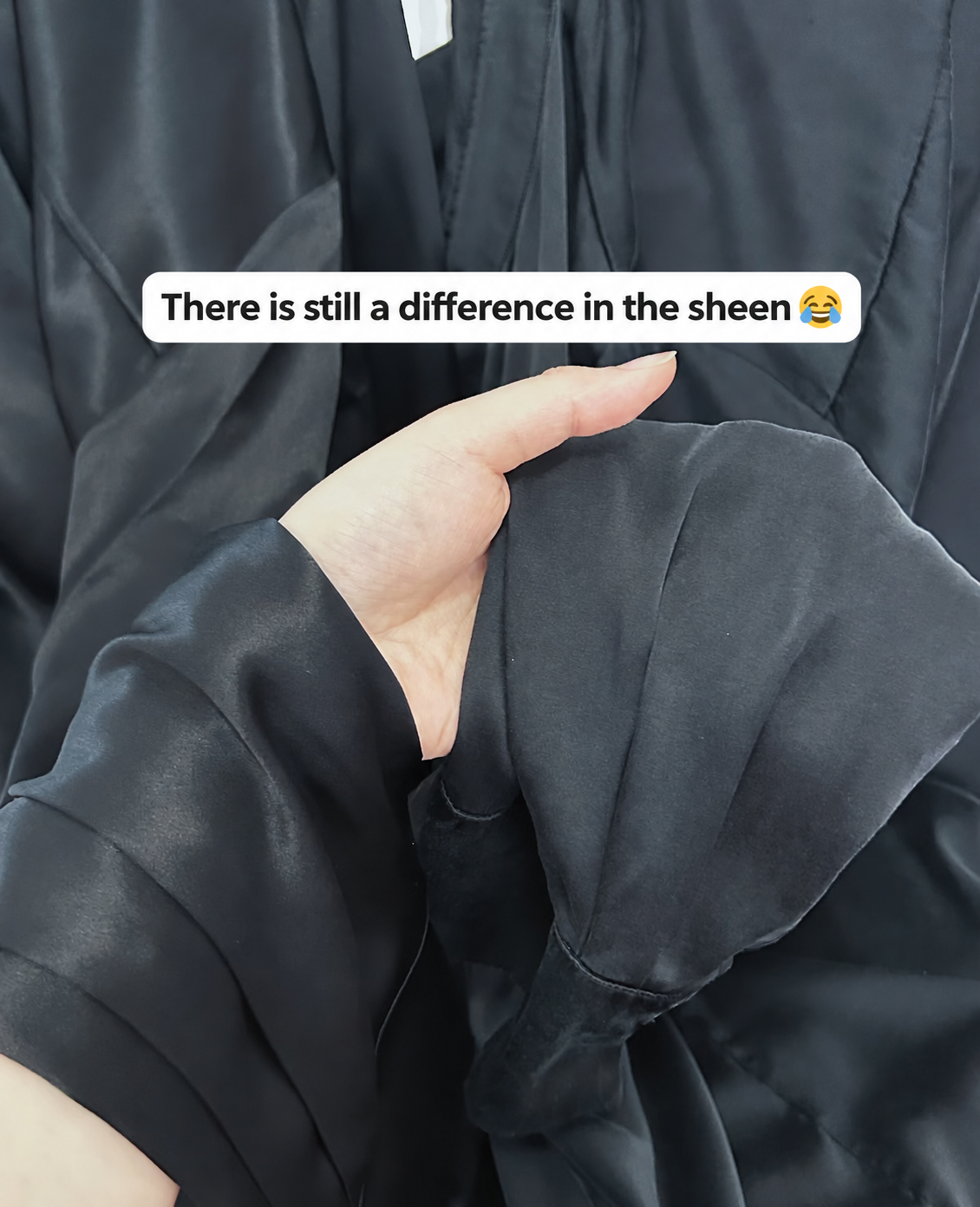
- Sheen goes before size does. Silk charmeuse gets its lustre from the long face floats of a satin weave. Tumbling and friction cause slight surface fuzzing and abrasion, and the surface turns whitish or hazy. This happens even when dimensional change is small.
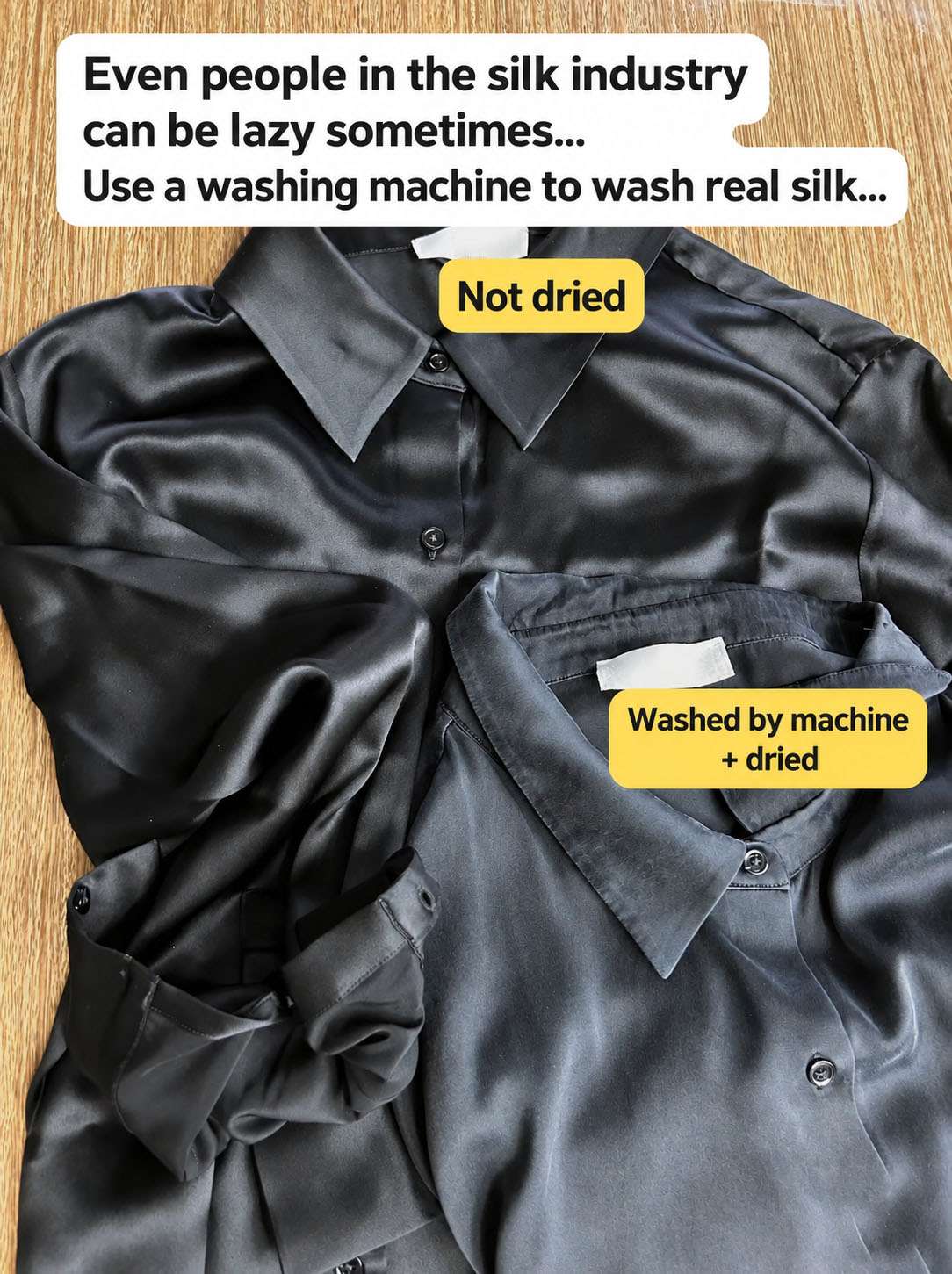
Air drying in shade removes the heat variable and most of the friction with it.
How Much Does Silk Shrink?
Construction drives the answer far more than fibre quality does. These are the reference ranges we use when planning cutting allowances. Actual shrinkage varies with yarn twist, weave density, finishing, dyeing and test method.
| Silk fabric | Before pre-shrinking | After pre-shrinking | Notes |
|---|---|---|---|
| Silk satin / charmeuse | 3-5% | ≤3% | Relatively stable |
| Silk twill | 3-6% | ≤3% | Warp shrinkage usually exceeds weft |
| Habotai | About 3-8% | ≤3% | Warp and weft can differ considerably |
| Silk organza | About 3-6% | ≤3% | Lightweight specs vary noticeably |
| Silk chiffon | About 5-10% | About 2-5% | Can exceed 10% under aggressive washing |
| Silk crepe de chine | About 8-12% | About 3-5% | High-twist construction, pronounced shrinkage |
| Silk georgette | About 8-15% | About 3-5% | Avoid quoting a fixed 13-15% range |
| Silk double georgette | About 10-15% | About 3-5% | Pre-shrinking matters most here |
The pattern matters more than any single cell. Smooth, lower-twist constructions such as silk charmeuse sit at the stable end. High-twist crepes such as crepe de chine and georgette sit at the volatile end, and they are also the fabrics where pre-shrinking makes the biggest difference.
Blends behave differently again. Research comparing engineered silk/nylon crepes against a conventional silk crepe found the hybrid fabrics held their handle better after five household wash-and-dry cycles, with improved dimensional stability.
This is why we record confirmed composition, construction, momme or GSM, colour or print, and finish in the quotation, sample or order specification. The word “silk” on its own does not tell anyone which of these fabrics is arriving. Sandwashing, for example, is a finish we list separately, most often on crepe de chine and charmeuse.
How to Prevent Silk From Shrinking
Washing and Drying Finished Silk Items
For finished garments and home textiles, the routine is short:
- Wash cold with a silk-specific liquid detergent. Skip enzyme and alkaline formulas.
- Soak 3-5 minutes, no longer, for routine handwashing. Long soaking does not clean silk better and does stress the fibre.
- Do not wring or twist. Press water out between two towels.
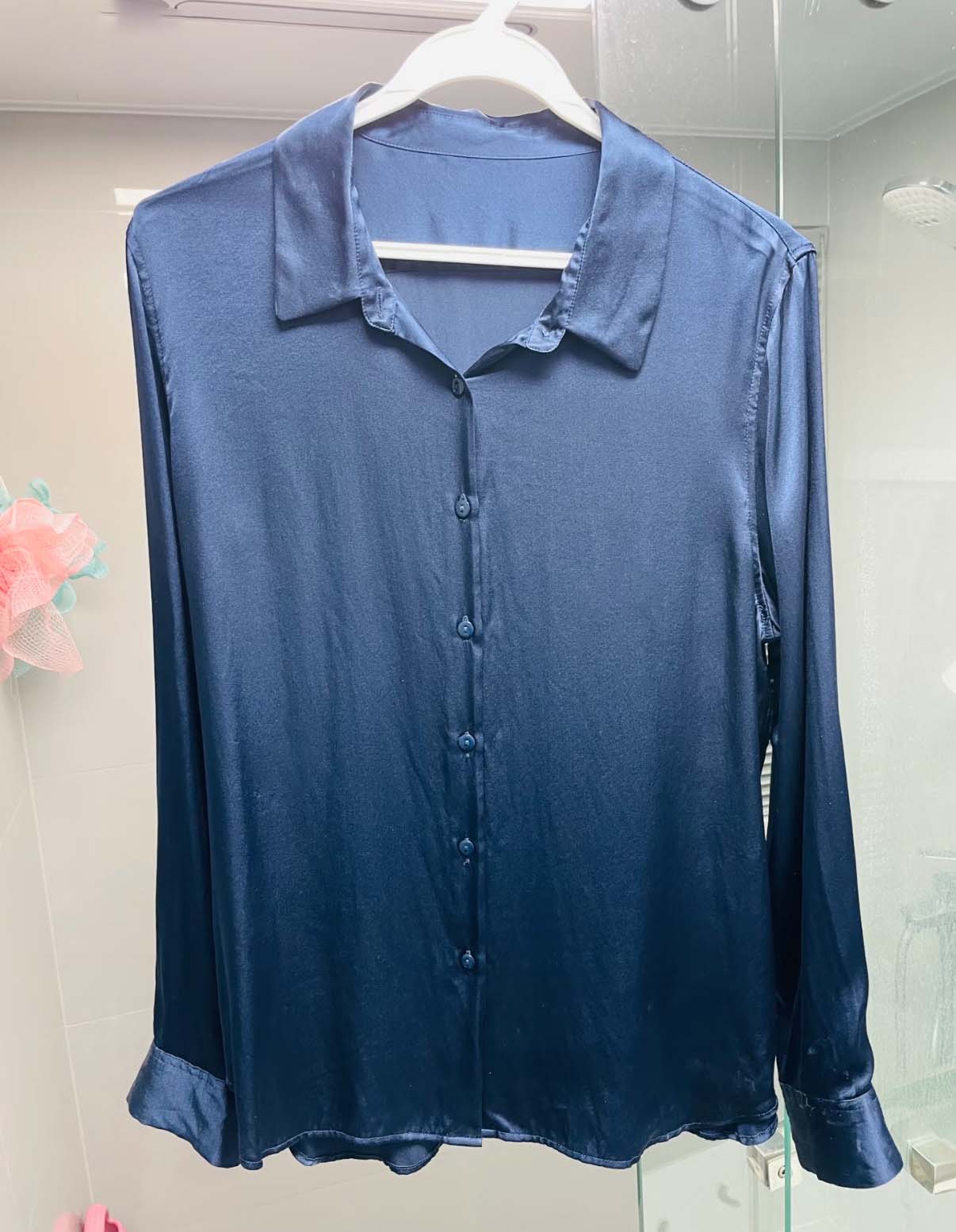
- Air dry flat or on a padded hanger, in shade, away from the dryer, direct sun and radiators.
- Machine wash only when the label permits it, always in a laundry bag on the gentle cycle.
Pre-treating Silk Fabric Before Cutting
If you buy yardage and sew it yourself, the decision happens before cutting. The shrinkage is going to happen once either way. All you get to choose is which stage it happens at.
Pre-treatment before cutting can change both the length and width of the fabric, so fabric allowances need to account for shrinkage and usable width. Using the ranges above, a fabric that shrinks about 8% needs roughly 2.2 metres ordered to leave you 2 metres of usable cloth. On a finished garment the same shrinkage gives you wrong body length, twisted side seams, a wavy hem and rippling at the collar and cuffs, and the piece is past saving.
So we tell customers to pre-treat the fabric once before cutting, and to match that pre-treatment to the cleaning method the garment will eventually get. If the garment will be washed, prewash the fabric. If it will be dry-cleaned, pre-dry-clean it. The two have to match, because the methods shrink fabric by different amounts. Washing takes out more than dry cleaning does. Pre-dry-clean a fabric and then hand the finished piece to a customer who washes it, and the shrinkage you were trying to remove is still sitting in the cloth. The first wash distorts the garment anyway, and the pre-treatment bought you nothing.
Pre-shrunk Fabrics and Matching Care Labels
Fabric that has already been pre-shrunk skips this step. All of our silk fabrics are pre-shrunk, so the buyer never carries that process, and it is the single largest reason a finished order holds its measurements. Buyers ask about this early. In one 2026 inquiry for a five-metre sample of 22-momme mulberry silk charmeuse, the buyer asked whether the fabric was pre-shrunk and colourfast before asking anything about price.
We also supply care labels, fibre-content labels, size labels and instruction cards, with content and size approved before production, so the washing instruction that reaches the end customer matches the fabric that was actually used.
Can You Fix Shrunken Silk?
Partly, and only for some causes.
A widely used home method adds a small amount of hair conditioner or silk softener to cool water, soaks the item for 10-15 minutes, then gently reshapes it while damp. Relaxation shrinkage is the case that can respond, because you are re-relaxing yarns that contracted rather than rebuilding anything. No quantified recovery outcome is published for this method. It is worth an attempt, and it may do nothing.
What does not come back: fibre abrasion and the hazy surface left by tumbling, dye loss, and seams that distorted because the components shrank at different rates.
Stop home treatment and get a professional assessment when you see heavy staining, visible colour loss, or a lining and shell that no longer hang together. Standard garment-care guidance is to avoid applying heat to a stained silk item, because heat sets the stain and removes the option of a clean recovery later.
Does Steaming or Ironing Shrink Silk?
Under normal care conditions, no. We measured silk dimensions before and after steaming and found them virtually unchanged, and we press every product before delivery so it arrives smooth.
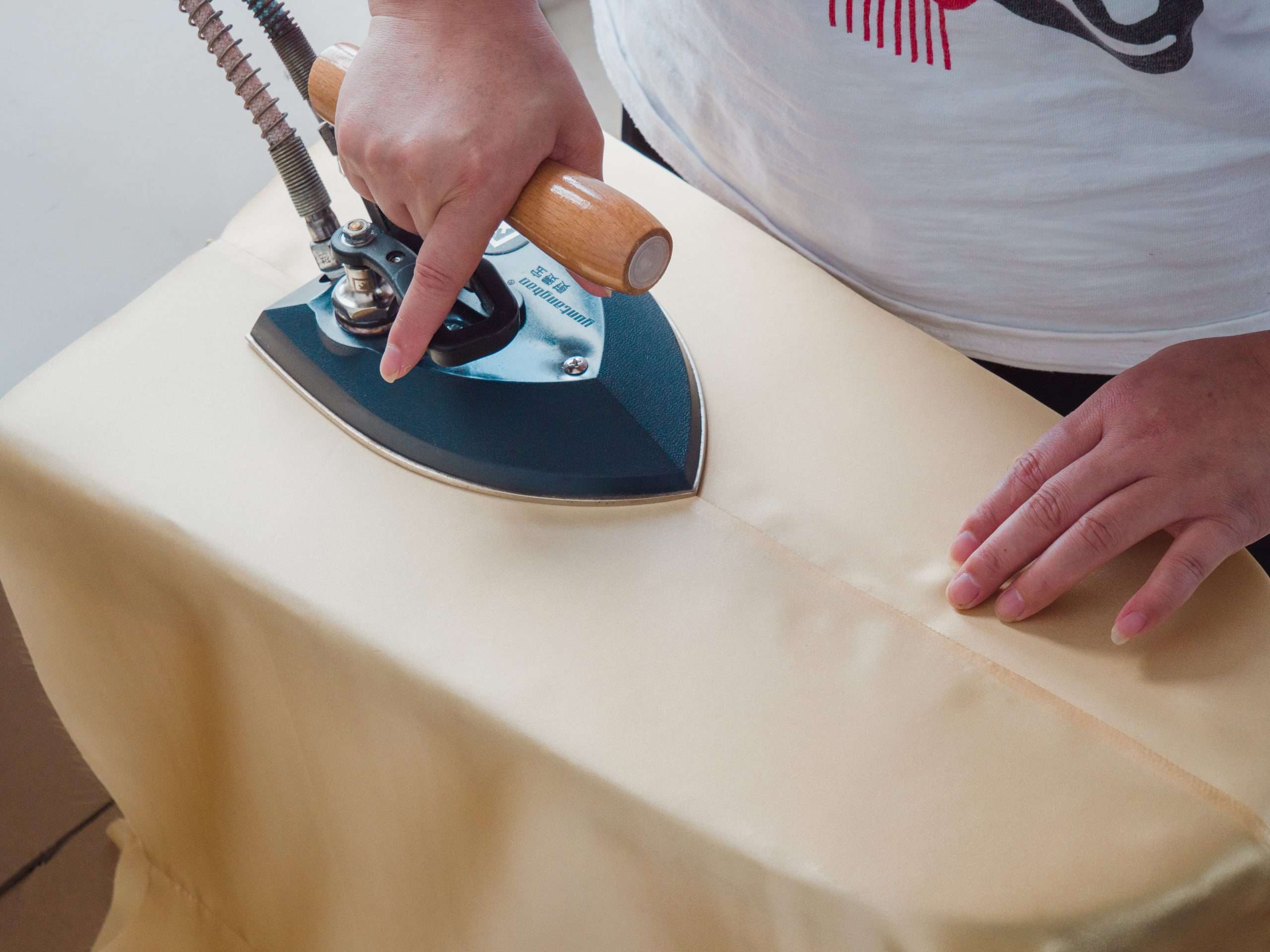
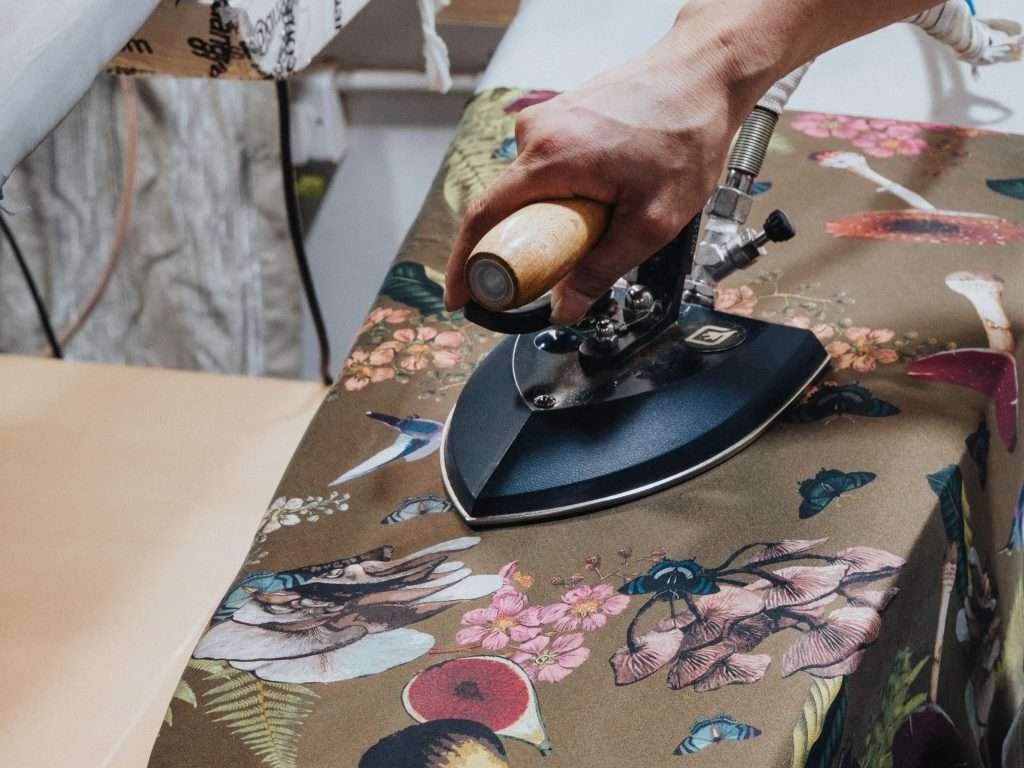
The risk comes from water spitting out of the iron and from direct heat on a dry face. Use low heat, keep a dry pressing cloth between the iron and the silk to protect against scorching and staining, and stop the iron from dropping water onto the fabric.
Why Silk Shrinks, and What Else Changes in the Wash
Silk is a protein filament, and the yarns in a finished fabric are held under tension through weaving, dyeing and finishing. Water allows residual tension in the yarns and fabric structure to relax. As the yarns reposition and the weave becomes more compact, the fabric can contract. This is relaxation shrinkage, and it is why the first wash is almost always the biggest one.
Twist makes the effect stronger. High-twist crepe yarns are engineered to contract, which is exactly what gives crepe de chine and georgette their texture. Wet those yarns without control and they keep contracting.
Repeated laundering has been measured on knitted protein-fibre fabrics. Researchers washed silk and silk-blend knits and recorded them through six cycles: the specimens became dimensionally stable by the sixth cycle, results varied by fabric type and colour, and water temperature changed the pattern of some properties but not the final stabilised ones. Microscopy showed fibrillation and fibre degradation from the laundering itself. The work was published in Textile Research Journal. Note the construction: those were knits, and most silk clothing is woven.
Not every change after washing is shrinkage. Customers sometimes send us photos of a piece they washed at home, held against leftover fabric from the same order. The colour reads duller, the hand feels papery rather than fluid, and the measurements are unchanged. The surface and the finish changed there, and nothing else did.
So getting silk wet does not ruin it. Hot water, machine agitation, wringing, alkaline detergent and dryer heat ruin it.
Most of what people call “silk shrinking” is really one hot dryer cycle plus a fabric that was never pre-shrunk. If you are developing silk pieces you intend to sell, both variables are settled before cutting, long before anyone prints a care label. Tell us the garment, the construction and the wash method you want on that label, and we will confirm the fabric and pre-treatment against it. Start with our silk fabric range or send us the specification.
Frequently Asked Questions
Does 100% silk shrink in the dryer?
Yes. Heat and tumbling together cause the largest change. For pre-shrunk silk satin, our working reference is roughly 0-2% further shrinkage after a cold wash and air drying, about 1-3% with low-heat tumble drying, and about 2-5% at medium heat. High heat or long dryer cycles can exceed 5%. Tumbling also dulls the surface through friction, so a garment can lose sheen even when it barely loses size.
Is silk ruined if it gets wet?
No. Water on its own is not the problem. Damage comes from hot water, machine agitation, wringing, alkaline detergent and dryer heat. Customers often send us photos of a washed piece that looks duller and feels papery next to leftover fabric from the same order, with the measurements unchanged. The surface and the finish changed there, while the dimensions held.
How much does silk shrink?
It depends on construction and pre-treatment. Untreated silk satin and twill commonly sit around 3-6%, habotai and organza around 3-8%, and high-twist fabrics such as crepe de chine, georgette and double georgette run far higher, roughly 8-15%. After pre-shrinking, most of these fabrics come down to 3% or less, with the heaviest crepes settling around 3-5%. These are directional ranges; the figure you get depends on the specific fabric and how it is washed.
Can you fix shrunken silk?
Sometimes, partially. A widely used method soaks the item in cool water with a small amount of hair conditioner or silk softener for 10-15 minutes, then gently reshapes it while damp. Relaxation shrinkage can respond to this. Fibre abrasion, lost sheen, dye loss and distorted seams do not, and no quantified recovery figure exists for it.
Does steaming or ironing shrink silk?
Under normal care conditions, no. We measured silk dimensions before and after steaming and found them virtually unchanged. Use low heat, keep a dry pressing cloth between the iron and the silk, and do not let the iron spit water directly onto the fabric.