
Table of Contents
- How to Prepare Your Hair Before Wearing a Bonnet
- How to put on a bonnet
- How Should a Bonnet Fit? Band Size and Hair Capacity
- How to Put Hair in a Bonnet by Hair Type and Length
- How to Tie a Bonnet or Adjust the Band
- How to Keep a Bonnet from Coming Off at Night
- Can anyone wear a bonnet?
- Frequently Asked Questions
You go to bed with the bonnet on. By 3 a.m. it’s somewhere in the sheets, your hair is out, and the back of it is already tangled.
Two things usually explain that: a band that doesn’t match your head, or a cap that can’t hold the amount of hair you put inside it. Technique comes third.
We manufacture silk bonnets for private-label brands, so we see both ends of this problem: buyers pass on fit complaints from their own customers, and we adjust band width, diameter and depth until the samples stop slipping.
How to Prepare Your Hair Before Wearing a Bonnet
Dry hair is best. Slightly damp is acceptable. Wet hair is not a good idea.
A silk bonnet reduces friction, frizz and moisture loss. It isn’t built for sleeping with wet hair sealed inside. The cuticle is more vulnerable when hair is wet, so the friction of turning over pulls at strands that are already weaker, and tangling and breakage become more likely. The bonnet also slows drying, which leaves your scalp damp and covered for hours. If you’ve just washed, let your hair dry properly first; dermatologists also prefer that you sleep on dry hair.
However you arrange your hair, keep it loose. The American Academy of Dermatology recommends arranging hair loosely under a covering, because repeated pulling and rubbing can contribute to traction alopecia. Their test is easy to remember: if your hairstyle feels painful, the style is too tight. They also list silk and satin coverings among the gentler options.
How to put on a bonnet
This sequence works for elastic, tie-band and drawstring bonnets; the closure only changes the last step. It also assumes the bonnet is the right size — if none of this holds by morning, the fit section below is where the answer is.
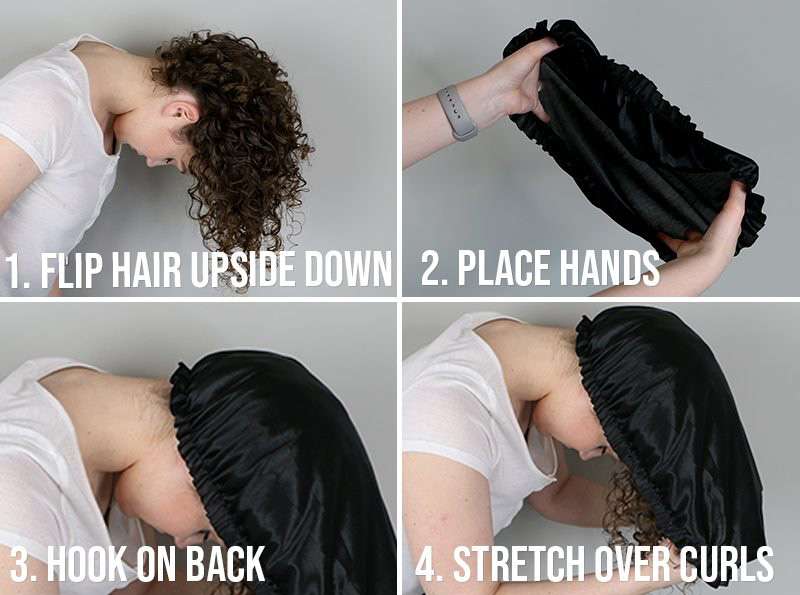
- Bend forward from the waist so your hair falls toward the floor. This is what gets the length into the cap instead of leaving it pinned against your neck.
- Hold the bonnet open with both hands, thumbs inside the band.
- Anchor the back edge of the band at your nape first.
- Draw the bonnet forward over your hair, toward your hairline.
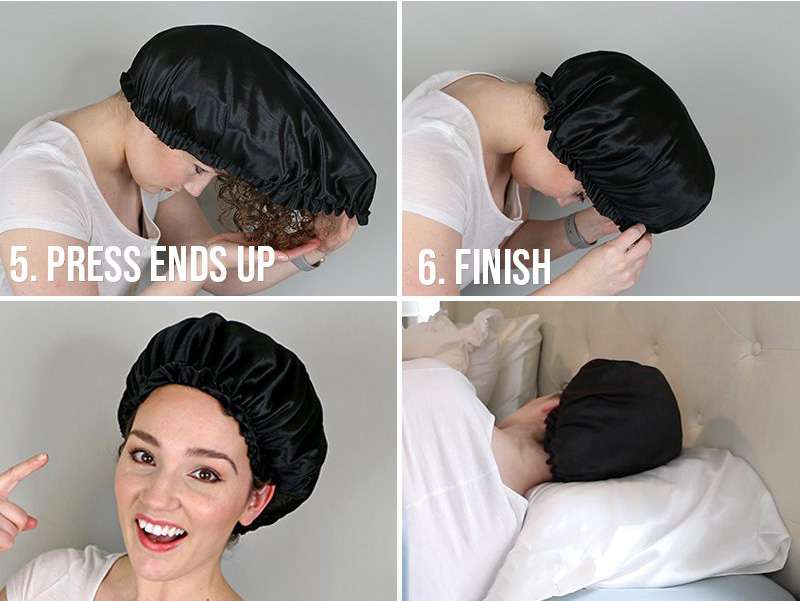
- Still bent forward, lift any loose ends up inside the cap with your fingers. Work around the nape and the sides, where strands escape most often.
- Stand up and seat the front edge just ahead of your hairline, so the band crosses the skin rather than sitting back on the hair.
- Decide about your ears. Covered or uncovered are both fine, so choose whichever feels better under your head.
Now check it before you settle down. Shake your head from side to side once: the bonnet should move with you rather than slide back. Slide a finger under the band — it should go in easily. Look at the nape in a mirror for strands hanging outside the edge, and push them up inside. And if the band leaves a visible line on your forehead after a minute or two, it’s too tight; the table further down says what to change.
How Should a Bonnet Fit? Band Size and Hair Capacity
Fit is two measurements, and they do different jobs.
The band decides whether the bonnet grips your head. The body of the cap decides how much hair fits inside without pressure. A bonnet can fail on either one, and the correction is different each time. Most people’s first instinct is to adjust the tension, but if the band is the wrong size or the cap is too shallow, tightening or loosening it won’t fix the underlying problem.
In our product records these are separate specification fields — fit method, hair capacity, adult or children’s sizing, and the material that touches the hair — and one recorded polyester satin bonnet is specified as a 70 × 30 cm panel with a 58 cm elastic circumference: the panel gives the interior its room, and the 58 cm figure is the part that sits against your head.
A buyer we worked with in September 2025 had exactly this problem with samples from an earlier round. Their previous bonnets had a 1-inch band and an 11-inch diameter, and that felt too small. Here is the full revised specification they asked us for. The first four items are the ones that answer “too small” for thick or long hair; the last three cover cord length, material and elastic quality:
- 14-inch diameter instead of 11 inches
- 1.5-inch band instead of 1 inch
- a fit for a 22 to 25-inch head circumference
- enough depth for thick or long hair
- a drawstring measuring 10 inches from the band to its tip
- 19 to 22 momme silk in reversible colors
- elastic that holds its shape without twisting
If you’re buying one for yourself, measure around your head where the band will sit and compare that with the size the seller gives. Then look at the depth of the cap against the bulk of your hair when it’s gathered. A 22-inch head with waist-length hair and a 22-inch head with a chin-length bob need the same band and very different interiors.
The inside surface matters as well. We build bonnets with Mulberry Silk on both sides, or across the complete hair-contact surface, depending on what the brand specifies. The smooth lining is the side that should face your hair, and on a reversible bonnet either side works.
How to Put Hair in a Bonnet by Hair Type and Length
The bonnet protects whatever arrangement you put inside it. So the arrangement should match the hair you want in the morning.
Curly, coily and wavy hair
Gather your curls into a loose high ponytail on top of your head, which is often called a pineapple, or into a loose braid if a pineapple won’t hold. The AAD suggests both for sleep, where the hair allows it, to keep the curl pattern and reduce friction against the pillowcase. Then put the bonnet on nape-first, as above, and lift the ends inside.
How to Put a Bonnet on Straight or Fine Hair
A big bun at the back of your head is what creates the bend you’re trying to avoid. It concentrates the fold in one place, and then your head rests on it all night.
One of our customers with very straight, waist-length hair twists the length into an S shape that lies flat along the back of the head instead — no waves, no tangles, even when the hair reaches the bottom of the cap; another, with fine hair just past the shoulders, twists it up onto the top of the head without clips and reports less tangling than before.
Either way, spread the hair rather than stacking it, and leave nothing folded hard under the weight of your head.
Short hair
Short or low-density hair doesn’t need extra capacity, so a regular size is enough. Clip the front pieces back first, slip the bonnet on, then tuck the remaining hair inside. Short layers around the hairline are the ones that work loose, so check them again after the band is seated.
Long hair, braids and locs
Long braids, twists and locs can hang naturally inside a long bonnet. Arrange the opening so the band isn’t dragging at the roots of your locs, since that’s where the pulling does damage. Capacity is what decides this, not the closure — one buyer’s first question about a style was simply whether it was large enough for locs, which is the right order to ask in.
How to Tie a Bonnet or Adjust the Band
Three constructions cover almost everything on the market, and they’re adjusted in different places.
Elastic band
There’s nothing to adjust at night, so the fit is decided when you buy. Check that the elastic springs back after you stretch it and that it doesn’t twist inside its channel, because a twisted band grips unevenly and creeps upward. A US buyer who ordered forest green silk bonnets for a subscription box put the standard well: elastic that felt secure without feeling harsh, over a lining that sat smoothly.
Long ties
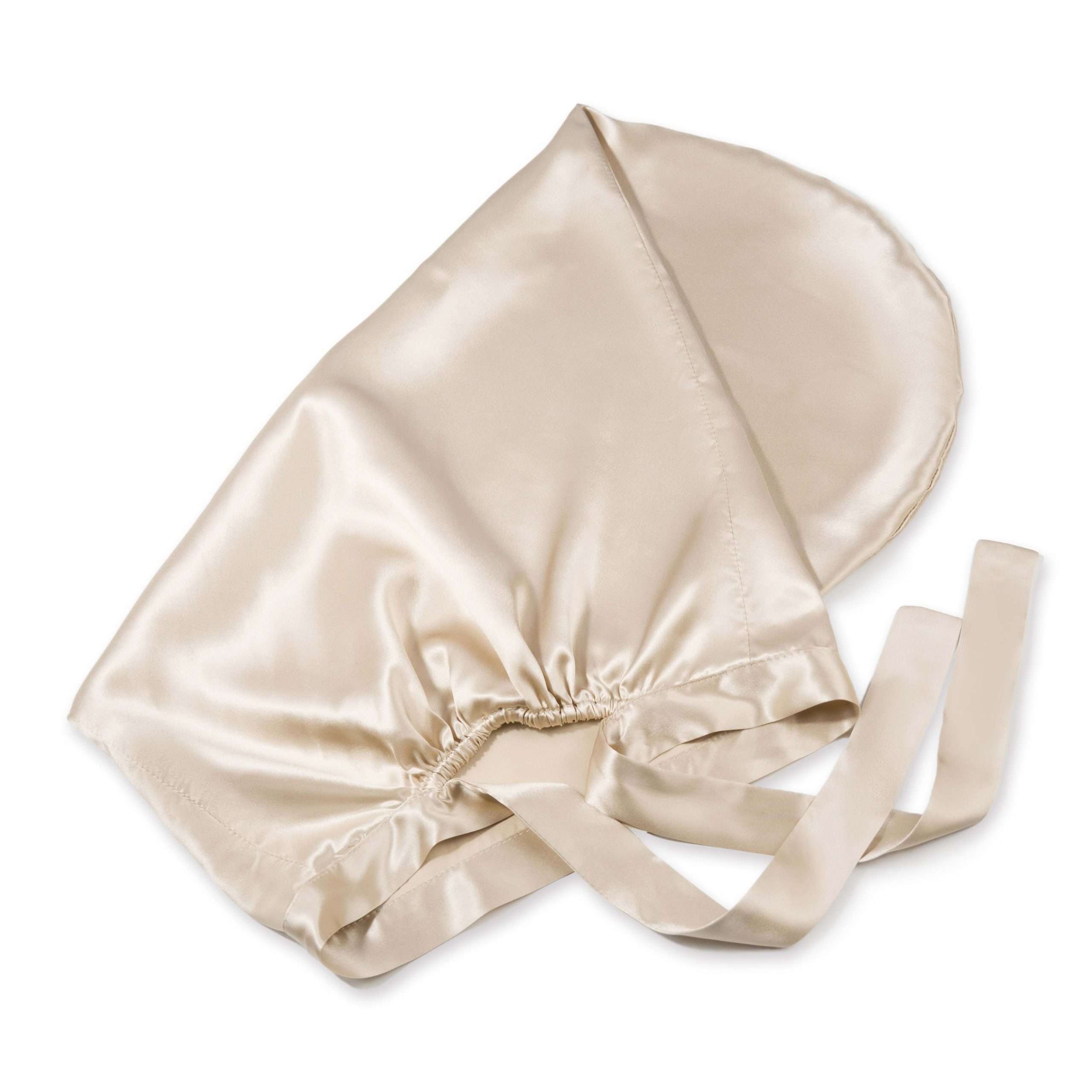
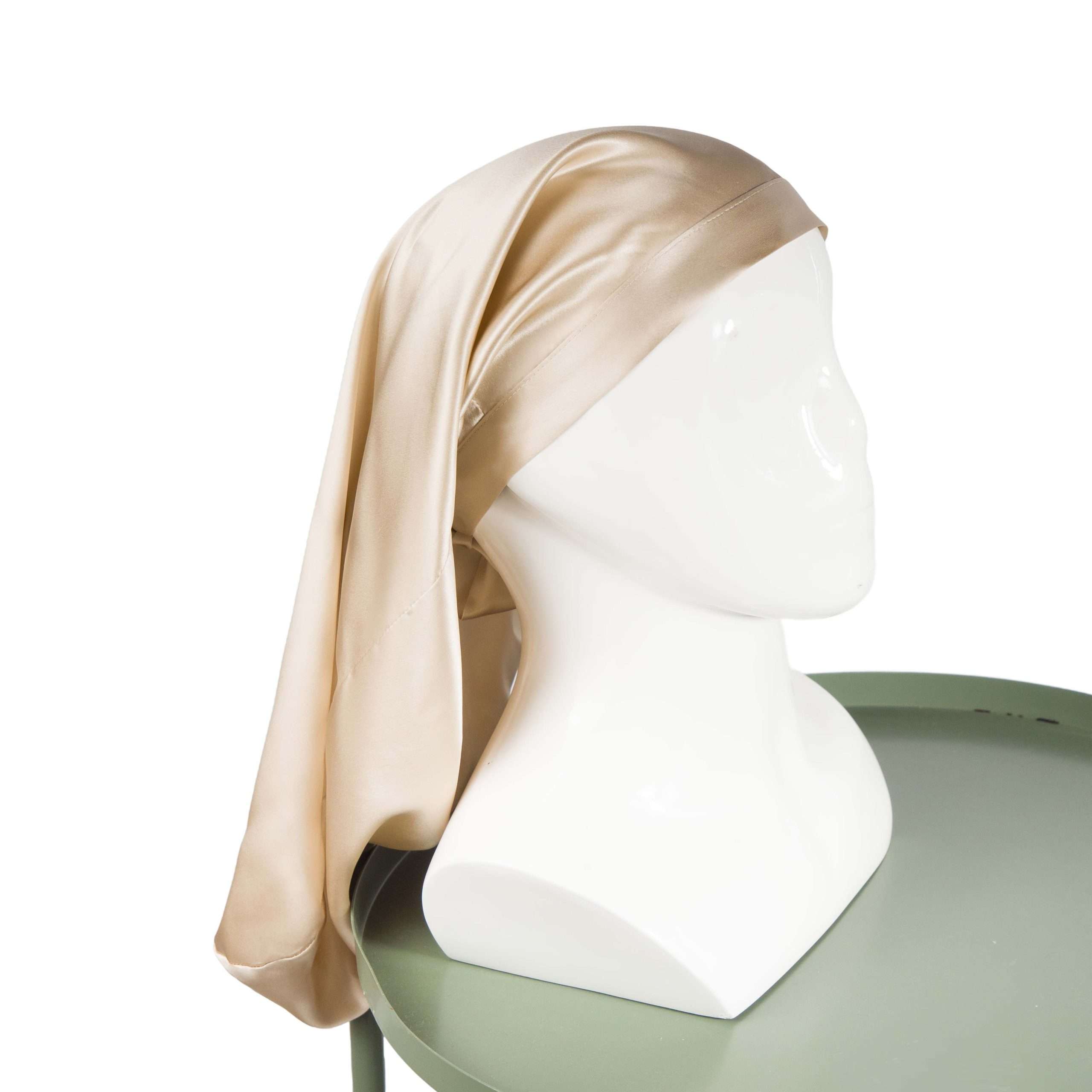
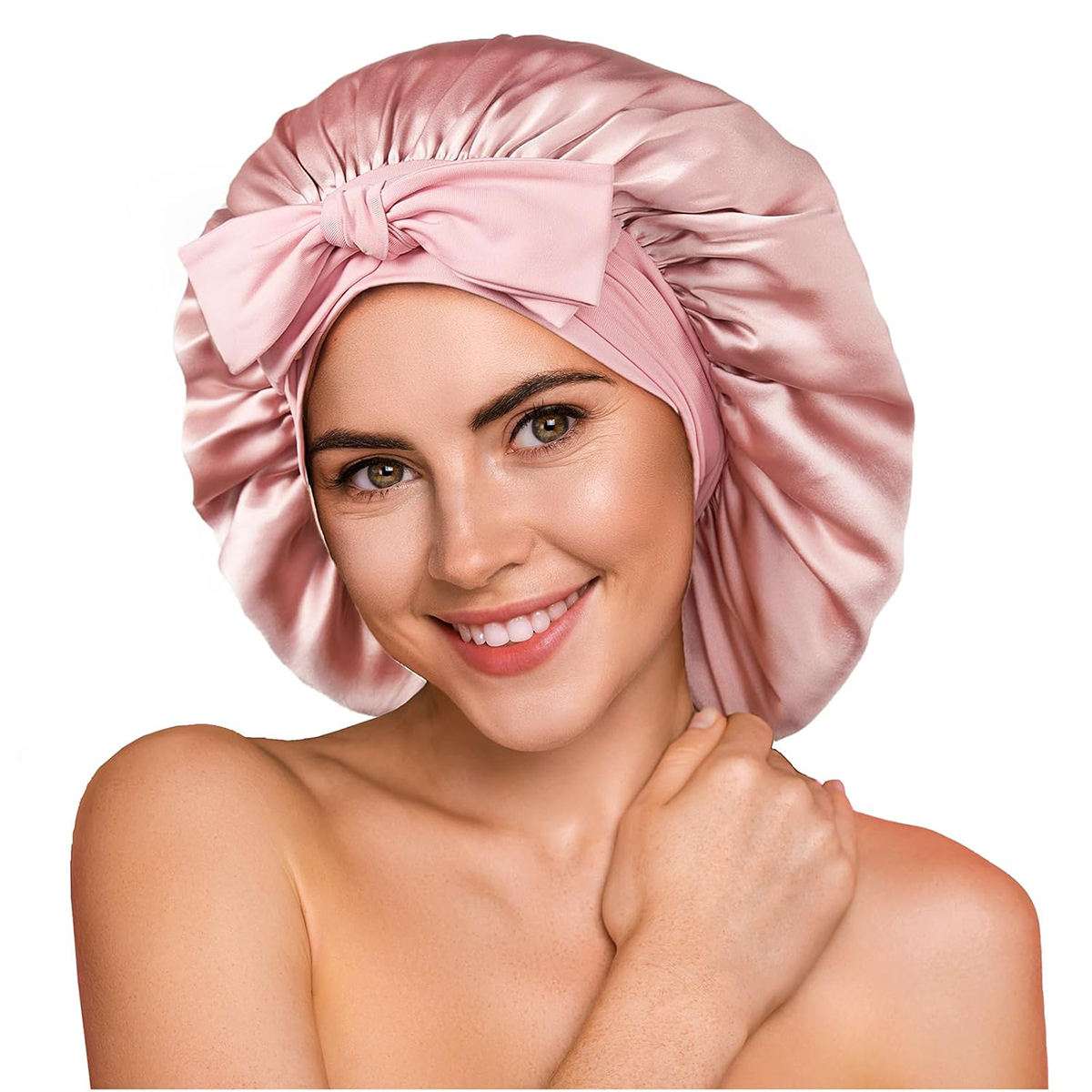
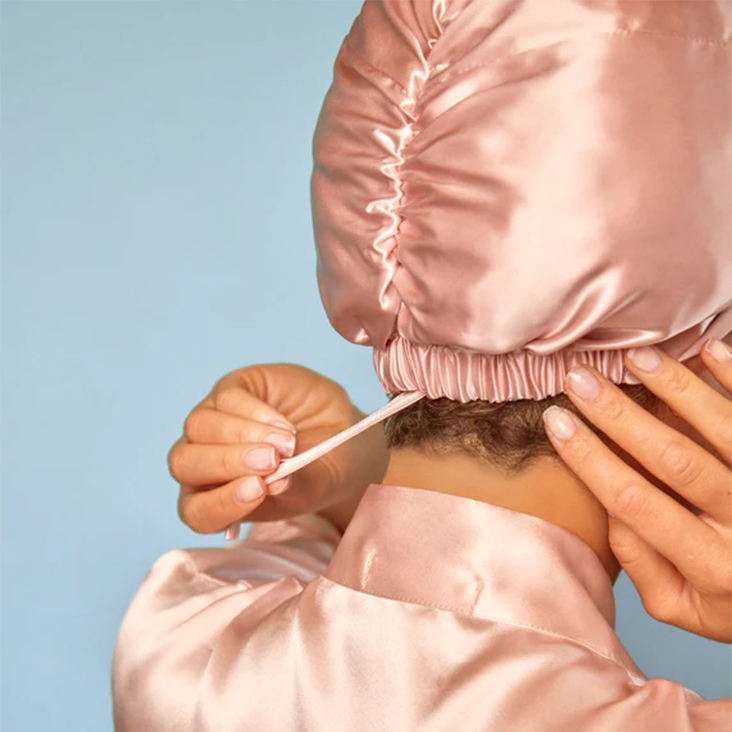
Enclose your hair first, then flatten the band along your hairline. Wrap the ties around and slightly above the forehead band, and finish with a bow wherever it’s comfortable. Keep the knot away from your ear line and off the spot your head rests on, which is where most tie-band discomfort starts. Our own long-tie bonnets are double-layer 22 momme in both an oversized and a standard body, and the oversized one is what long hair needs.
Drawstring
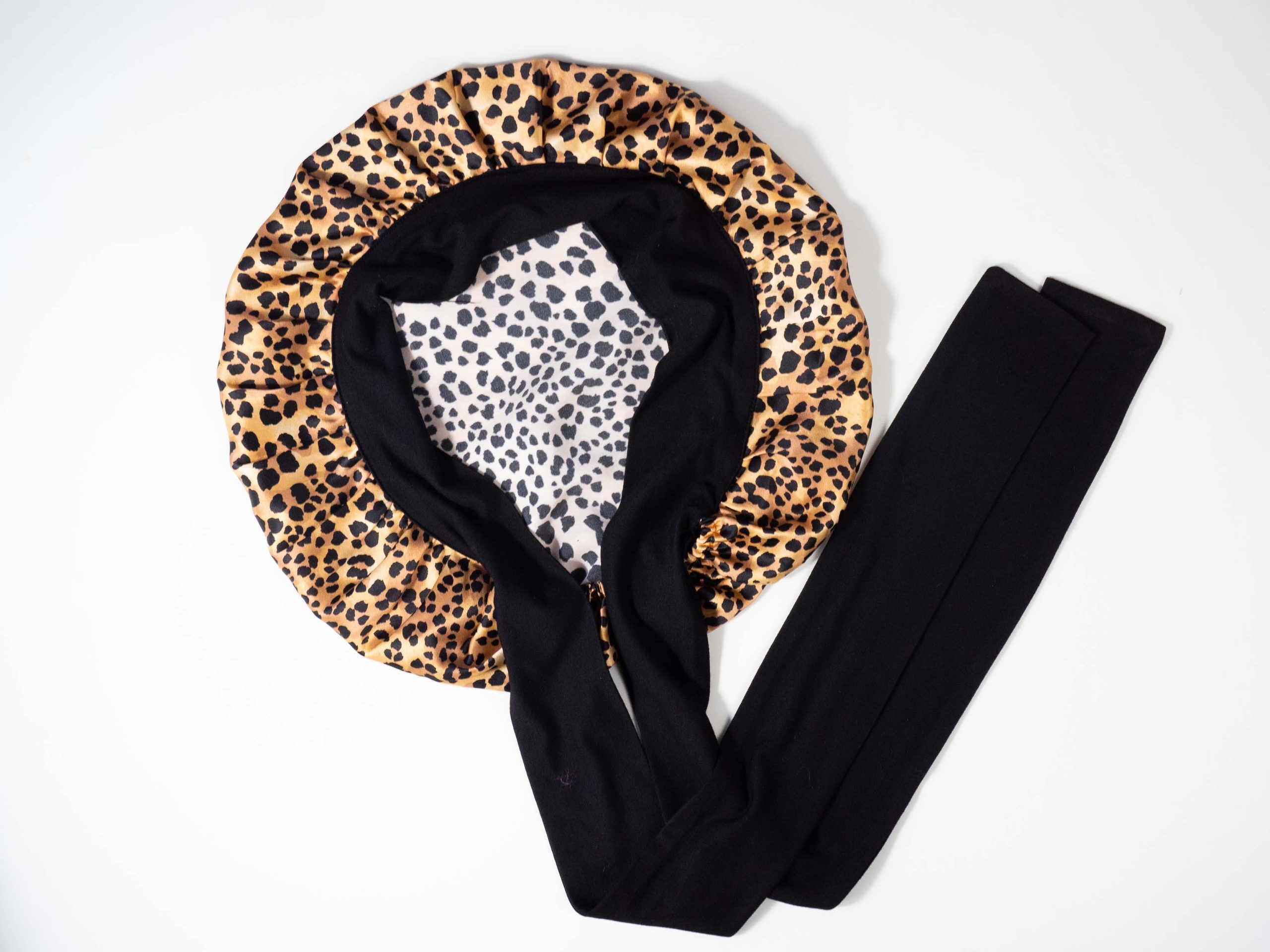
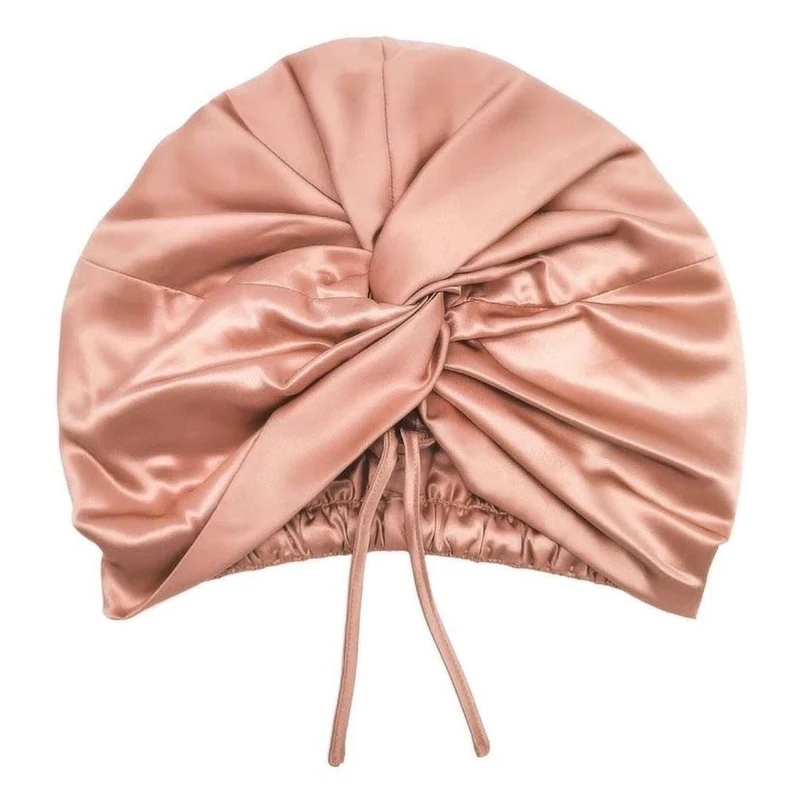
Cover your hair, then pull the cord until the band feels secure without pressing. On a gathered front style both cords hang at the front, so you draw them together and tie them off. On most other styles the cord runs to the nape, where you pull it and slide the plastic adjuster along to hold that setting. Check it again once your hair is fully inside, because loading the cap changes the tension. For the cord itself, the 10-inch length in the specification above is a useful reference: enough to grip and tie off without leaving a long tail loose on your pillow.
How to Keep a Bonnet from Coming Off at Night
Most overnight complaints come down to fit. Work from the symptom.
| What you see in the morning | Likely cause | What to change |
|---|---|---|
| Bonnet off your head, in the bed | Band too loose, or hair volume pushing the edge up | Smaller band circumference, or a deeper cap for the same band |
| It slips when tied comfortably, but holds when tied tight | Band circumference doesn’t match your head | Change the size, not the tension |
| Pressure or soreness at the ears or under the knot | Knot sitting on the ear line or under the resting side of your head | Move the knot higher and off-center |
| Strands escaping at the nape | Hair not fully lifted inside, or the edge sitting behind the hairline | Re-seat the front edge ahead of the hairline and tuck the ends up |
| Hair feels smooth but has waves and kinks | The surface is doing its job; the problem is hair folded hard inside, under the weight of your head | Spread the length flat, or use a cap with more depth |
| A line across your forehead | Band too tight, or too narrow for the tension it’s carrying | Wider band, larger circumference, or both |
Row two is the one people fight for weeks, so it’s worth spelling out. One customer with long, moderately thick wavy hair told us that tying the bonnet comfortably let it slip during restless sleep, while tying it tighter kept it on and gave her a mild headache. If comfortable means loose and secure means painful, no amount of retying will solve it. The band is the wrong size for your head.
Can anyone wear a bonnet?
Yes — reduced friction between hair and pillow helps any texture and any gender, and men wear bonnets over short hair, twists and locs on the same sizing logic: band for the head, interior for the hair.
The practice comes out of Black hair-care traditions, where covering hair overnight has protected coils, braids and locs for generations. Worth knowing, and worth crediting, whichever texture you’re wearing one over.
If you’re developing a bonnet for your own brand rather than buying one off a shelf, the fit variables in this guide are the ones to write into your specification. Those are the fields we work through on custom silk bonnet projects, and the drawstring and diameter revisions described above are a normal part of getting a sample right. If you also need something gentler for gathering hair before it goes in, we make silk scrunchies for the same reason.
Frequently Asked Questions
Do bonnets go over or under your ears?
Either one — the ears are a comfort decision, not a fit rule. Try one night each way and keep whichever leaves no pressure line.
Is it better to put wet or dry hair in a bonnet?
Dry hair is best, slightly damp is acceptable, and wet hair is not a good idea.
Which side of a bonnet should face your hair?
The smooth lining. On a reversible bonnet with silk on both sides, either side works.
How do I know my bonnet is the wrong size?
If it slips when tied comfortably but only holds when tight, the band circumference is wrong; if hair pushes the edge up at the nape or you wake with bends in it, the cap is too shallow.
Can I wear a bonnet if I’m not Black?
Yes. It works on any texture and for any gender, and the practice comes out of Black hair-care traditions, which is worth crediting when you start using one.