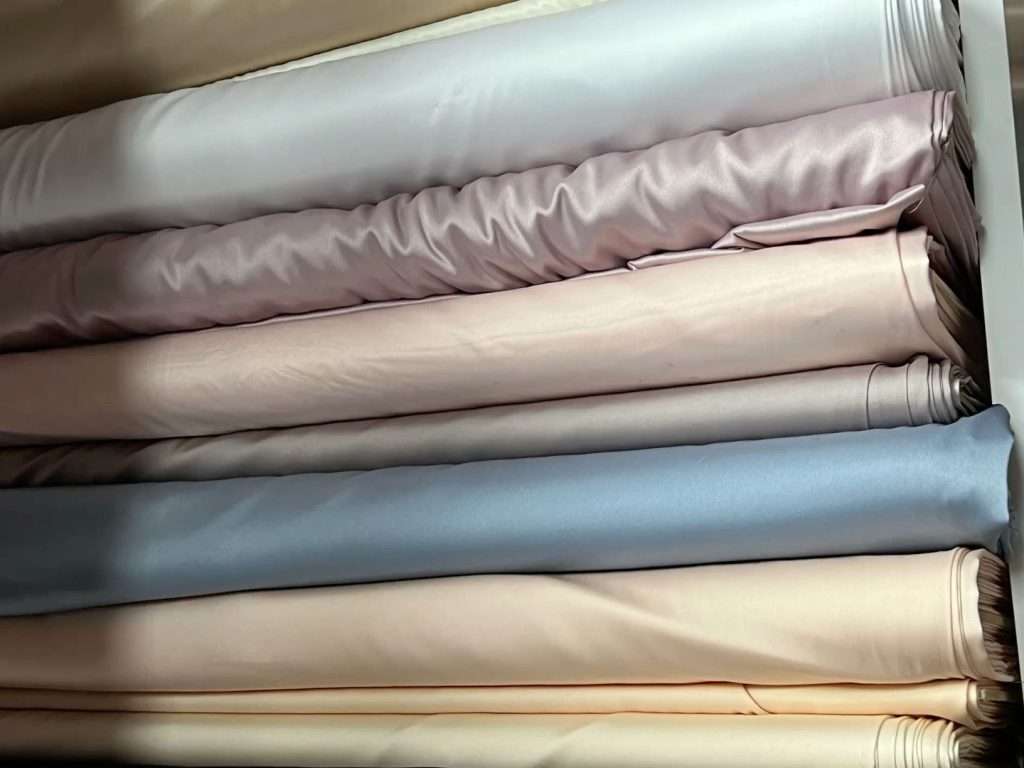
Most adult bandanas sold as “standard” are squares measuring 21 to 22 inches (53 to 55 cm) per side. If you want one number to shop with, use 22 inches (56 cm).
That covers the shelf, not the fit. The flat square is rarely the problem; what is left after folding, wrapping, and tying is. As a maker of square silk scarves for brands and private-label buyers, that is very nearly the only sizing complaint we get.
Contents
- What Is the Standard Bandana Size?
- Bandana Size Chart in Inches and Centimeters
- Which Bandana Size Works for Your Use?
- How to Measure for a Comfortable Fit
- What to Check When Buying a Silk or Custom Bandana
- Frequently Asked Questions
What Is the Standard Bandana Size?
There is no published standard behind the word, only a cluster of sizes manufacturers have settled on. Three current specifications show how wide that cluster is:
- 21 × 21 inches (53 × 53 cm), cotton sheeting, hemmed edges
- 21.5 × 21.5 inches (55 × 55 cm), flat size, 100% cotton
- 22 × 22 inches (56 × 56 cm), 100% cotton
A full inch separates smallest from largest, and all three would sit in the same retail bin (Valucap VC21, Port Authority C960, Rothco Trainmen Paisley). A typical bandana size is a range, not a figure. Metric listings land in the same band under another name. When a buyer asked us for twenty small silk scarves, we offered the colors in 53 × 53 cm. Our own production sizes start in centimeters, and the chart in the next section is that set.
Two labels you can ignore: men’s and unisex. Neither is a measurement, and head circumference varies more between two adults than a 21-inch square varies from a 22-inch one. Read the stated bandana dimensions instead, and check whether that number is the finished size after hemming or the cut size before it. On a narrow double-fold hem the difference is about an inch.
Bandana Size Chart in Inches and Centimeters
These are the sizes we produce most often, and they are also where orders from US and European buyers cluster, so they work as a reference set when you are choosing. The chart is built on the centimeter specification, with inch sides as close equivalents. Each diagonal is calculated from the centimeter side, then converted to inches and rounded (NIST Handbook 44, Appendix C). Read the diagonal column first. It gives the corner-to-corner distance of the flat square, and almost every way of wearing a bandana starts with a diagonal fold.
| Square side (inches, approx.) | Square side (cm) | Diagonal (inches, approx.) | Commonly used for |
|---|---|---|---|
| 18 | 45 | 25 | Children, pets, pocket squares, bag ties |
| 20 | 50 | 28 | Small heads, wrist ties, narrow headbands |
| 22 | 55 | 31 | Adult standard; head wraps, neckerchiefs |
| 24 | 60 | 33 | Full head coverage, fuller hair, loose knots |
| 26 | 65 | 36 | Larger head wraps, loose knots |
| 28 | 70 | 39 | Large bandana; do-rags, bandeaus, bandana tops |
| 35 | 90 | 50 | Oversized bandana and silk square scarves |
| 39 | 100 | 56 | Large silk squares, shawl-style styling |
Sizes like 55, 70, and 90 cm are nominal metric products, not metric versions of an inch size. A 55 cm square is not a 22-inch square, a 70 cm square is not a 28-inch square, and a 90 cm square is not a 35-inch square. Each pair sits a few millimeters to a centimeter apart per side. That gap is invisible on paper and obvious when a print has to be centered.
We’ve found that even a 3–4 cm difference in the finished size can affect where the border sits and how the artwork is scaled. That’s why we normally confirm the final size before the print file is prepared.
Which Bandana Size Works for Your Use?
A rolled band uses almost none of the square’s width and all of its length. A head covering uses most of both. That is why the same square succeeds in one style and fails in another.
Narrow headbands, wrist ties, and bag accents. Rolled down to a 1- to 2-inch band, you need length more than area, and the band runs along the diagonal while the surplus folds away inside it. Anything from 18 to 22 inches (45 to 55 cm) works.
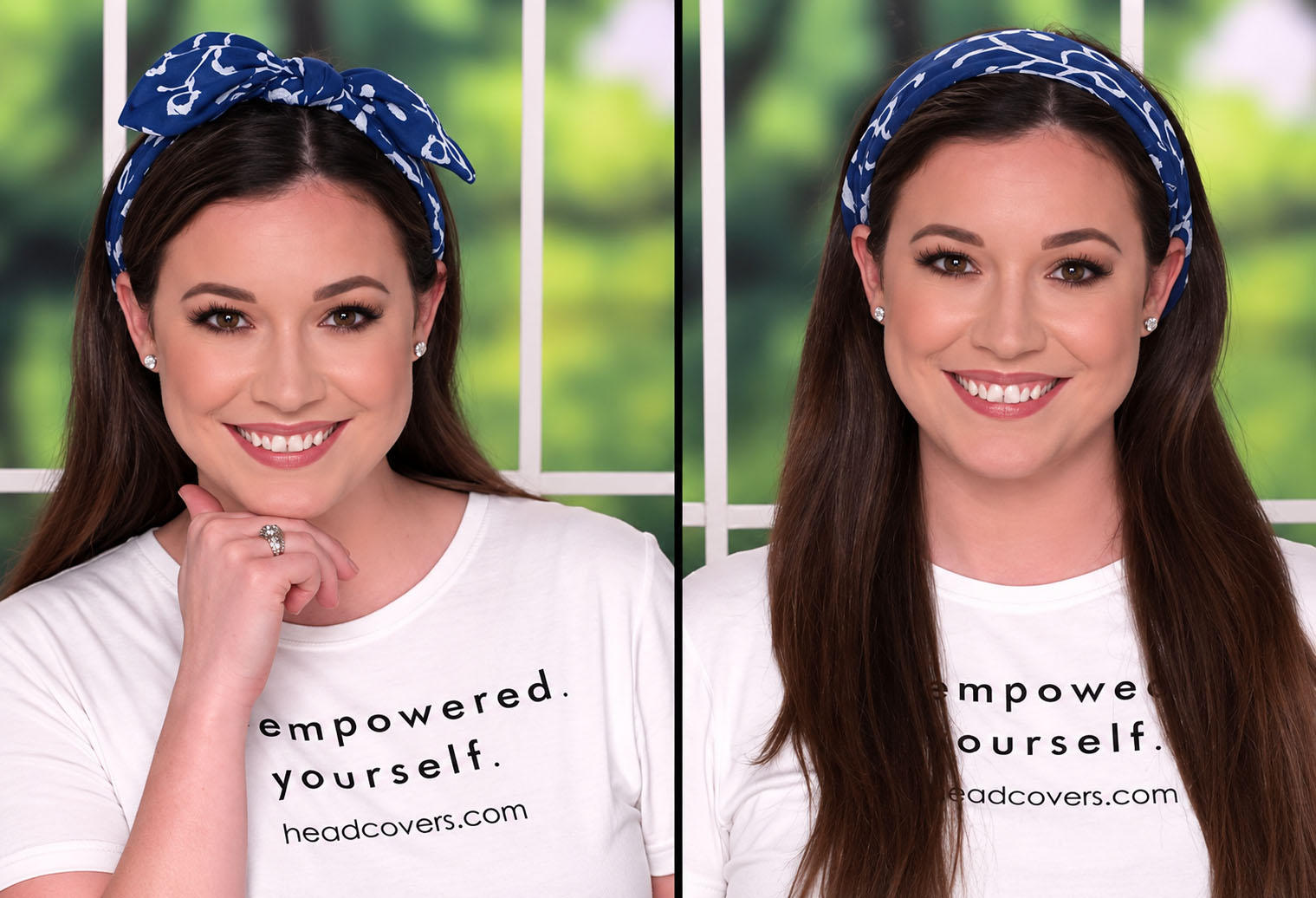
Face covers. A 22-inch (55 cm) square folded corner to corner gives roughly 31 inches of top edge, enough to reach around and tie behind the head on most adults.
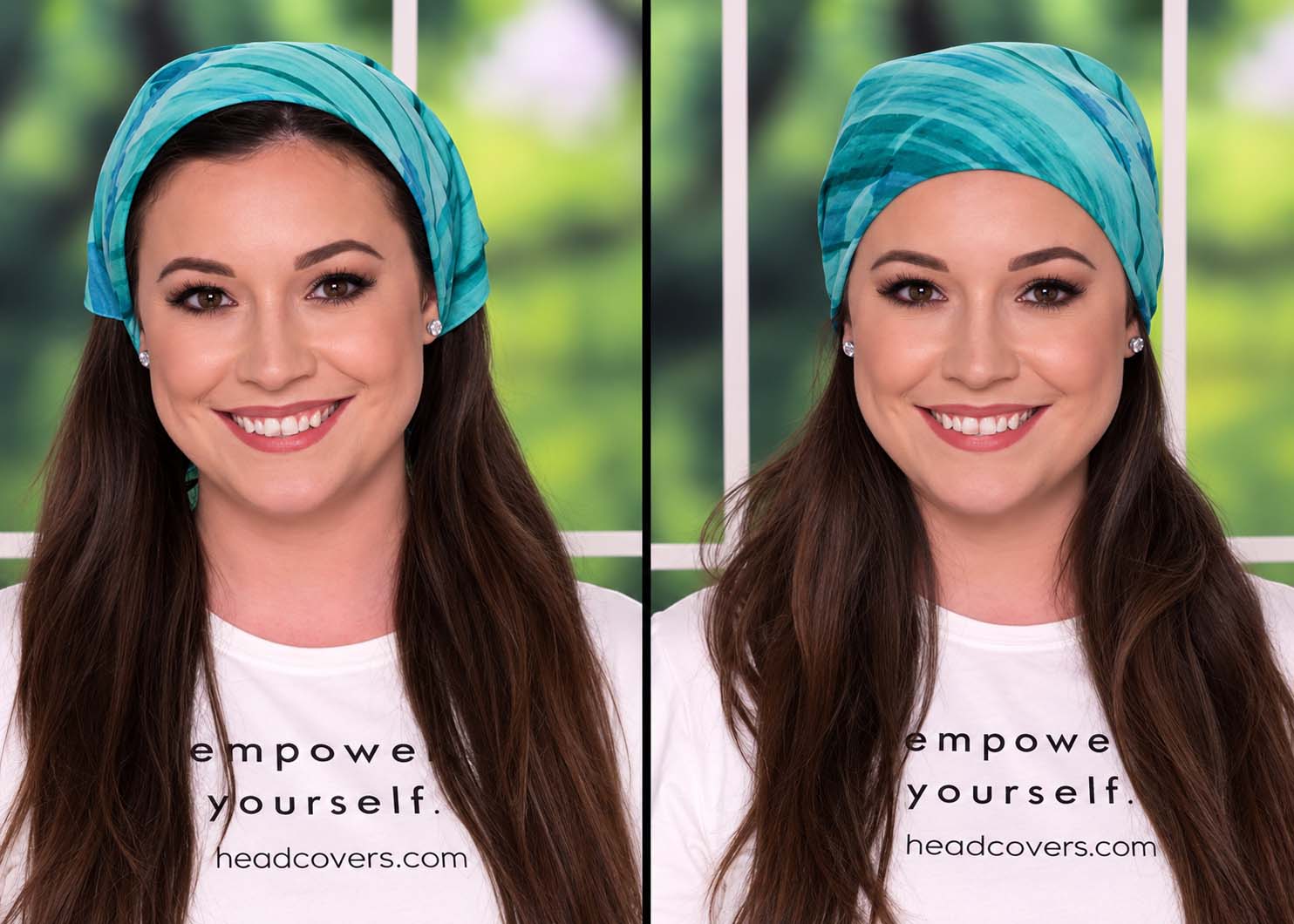
Head wraps and full coverage. This is where the bandana size for head question gets practical. Those same 31 inches have to cover the crown, reach the nape, and still leave two tails long enough to knot. On short hair it works. Add volume, braids, or a protective style and the crown eats the length the tails needed, so the knot ends up too small to hold. Move to 24 inches (60 cm), or 26 to 28 inches (65 to 70 cm) if you also want the tails to drape rather than sit tight. Two things shift this up a size on their own: more hair to cover, and a double knot, which takes noticeably more length than a single one.
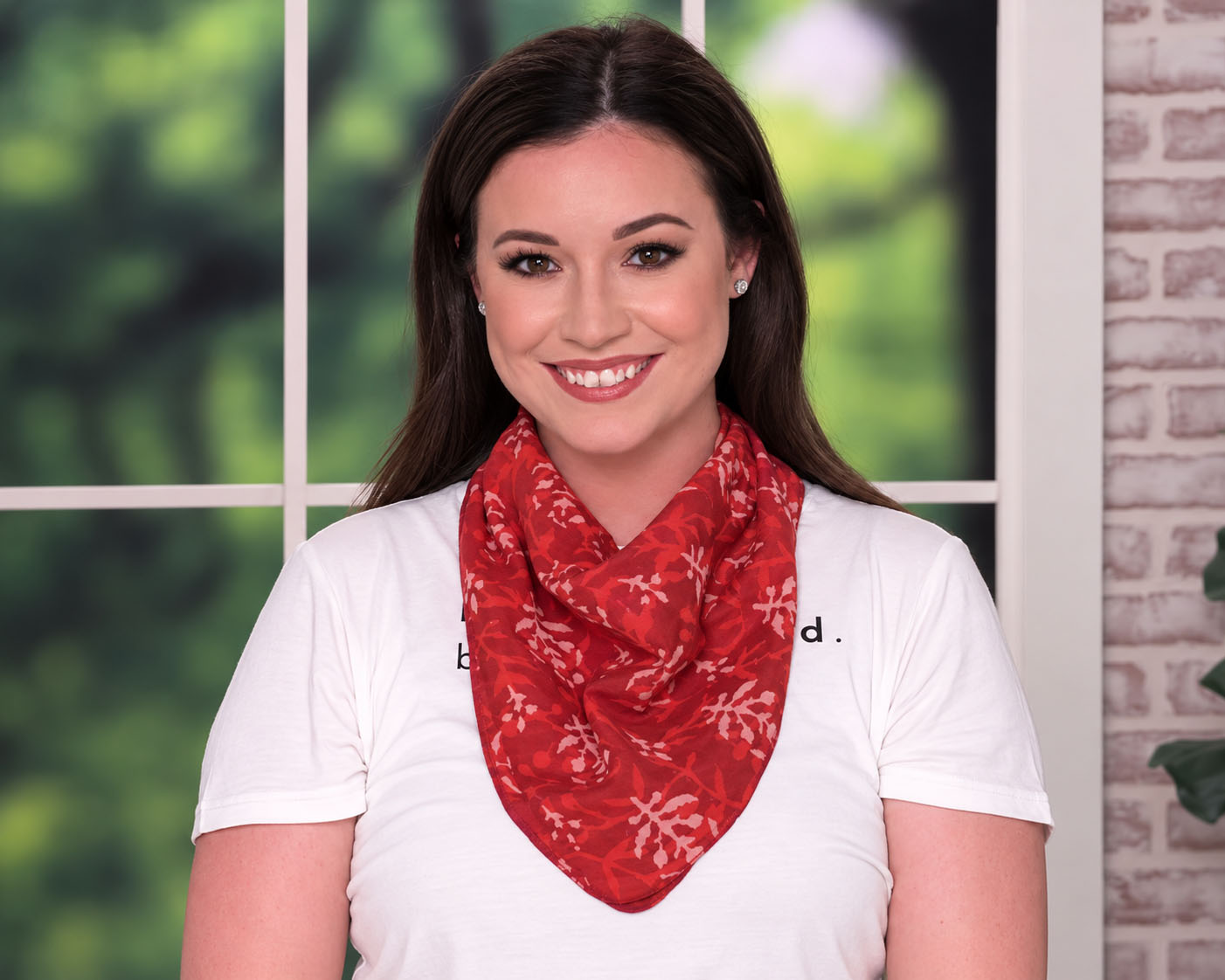
Neckerchiefs and tie-style knots. The roll is tight and the knot is bulky, so these need the most length of any style. A standard square will knot, but it sits high and short. Use a 28-inch (70 cm) cotton square or a 35-inch (90 cm) silk square.
Bandeaus, bandana tops, and do-rags. Start at 28 inches (70 cm). Below that the square has to cross a body dimension and still tie, and the diagonal runs out.
How to Measure for a Comfortable Fit
Measure the wearing position, not the widest part of your head. For head wear, run a soft tape along the hairline, above the ears, where the folded edge will actually sit. For neck wear, measure where the knot will rest, not at the collar line. Then:
- Choose the fold: diagonal triangle, rolled band, or flat panel. It decides how much of the square becomes coverage and how much becomes tails.
- Test it with a square you already own. Measure its side before folding, fold it the way you intend to wear it, and tie it.
- Check the tails, not the coverage. Coverage problems show up in the mirror; short tails are what make a bandana fail, because a knot you can barely tie works loose within an hour.
- Compare the listed finished dimensions, in the same unit, against the square you just tested.
For a basic head wrap, fold diagonally with the opposite tips offset by about two inches, lay the folded edge along the hairline, then double-knot underneath the tail at the back. The offset leaves one tail longer, which makes the knot easier to tie and tuck.
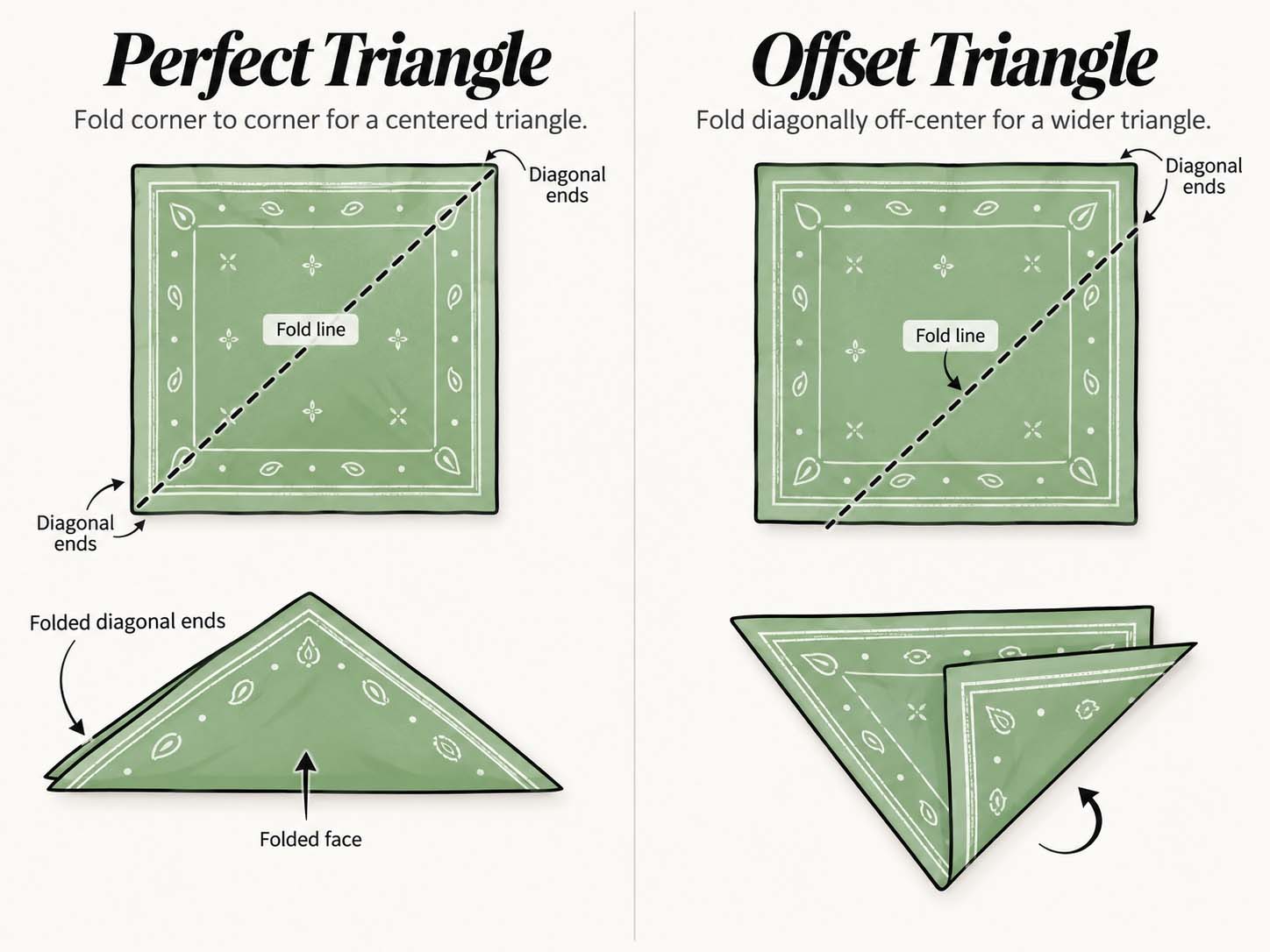
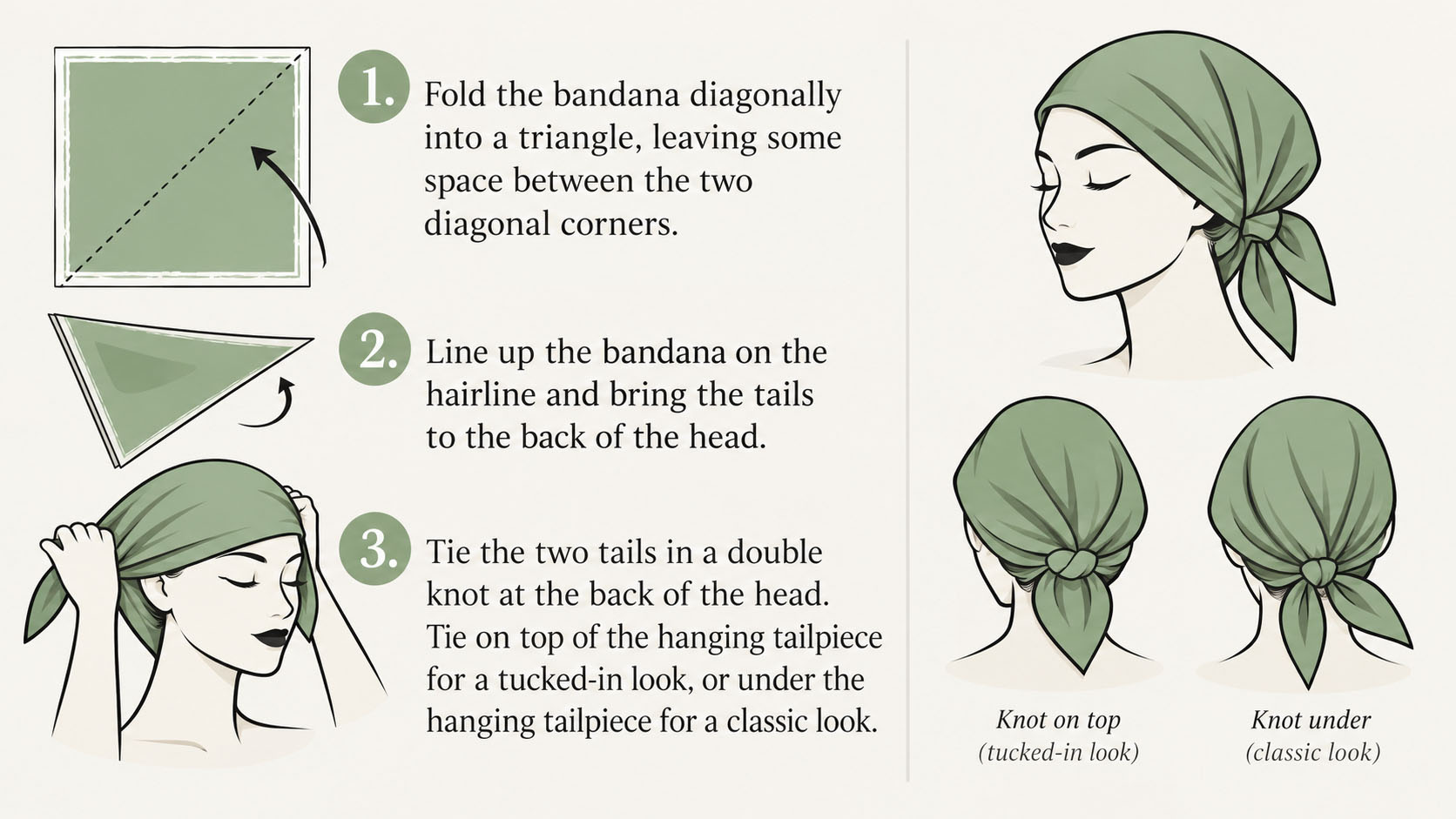
Why a standard bandana feels too short when you roll it
This comes up with tie-style and Boy Scout rolls. A customer buys a standard square, rolls it, and the result is nowhere near long enough for the look they wanted. They assume they bought the wrong size. Usually they bought the wrong size for that fold.
Those 31 inches only exist while the square is flat. Rolling along the diagonal pulls the corners inward, so the band is already shorter before you tie anything; the knot takes several more inches, and the tails come out of what is left. A 35-inch (90 cm) square starts from about 50 inches, which is nearly 20 inches more raw length for the same fold.
What to Check When Buying a Silk or Custom Bandana
A silk bandana is usually a square scarf by another name, sold on specifications instead of from a size bin. Confirm four things before you pay:
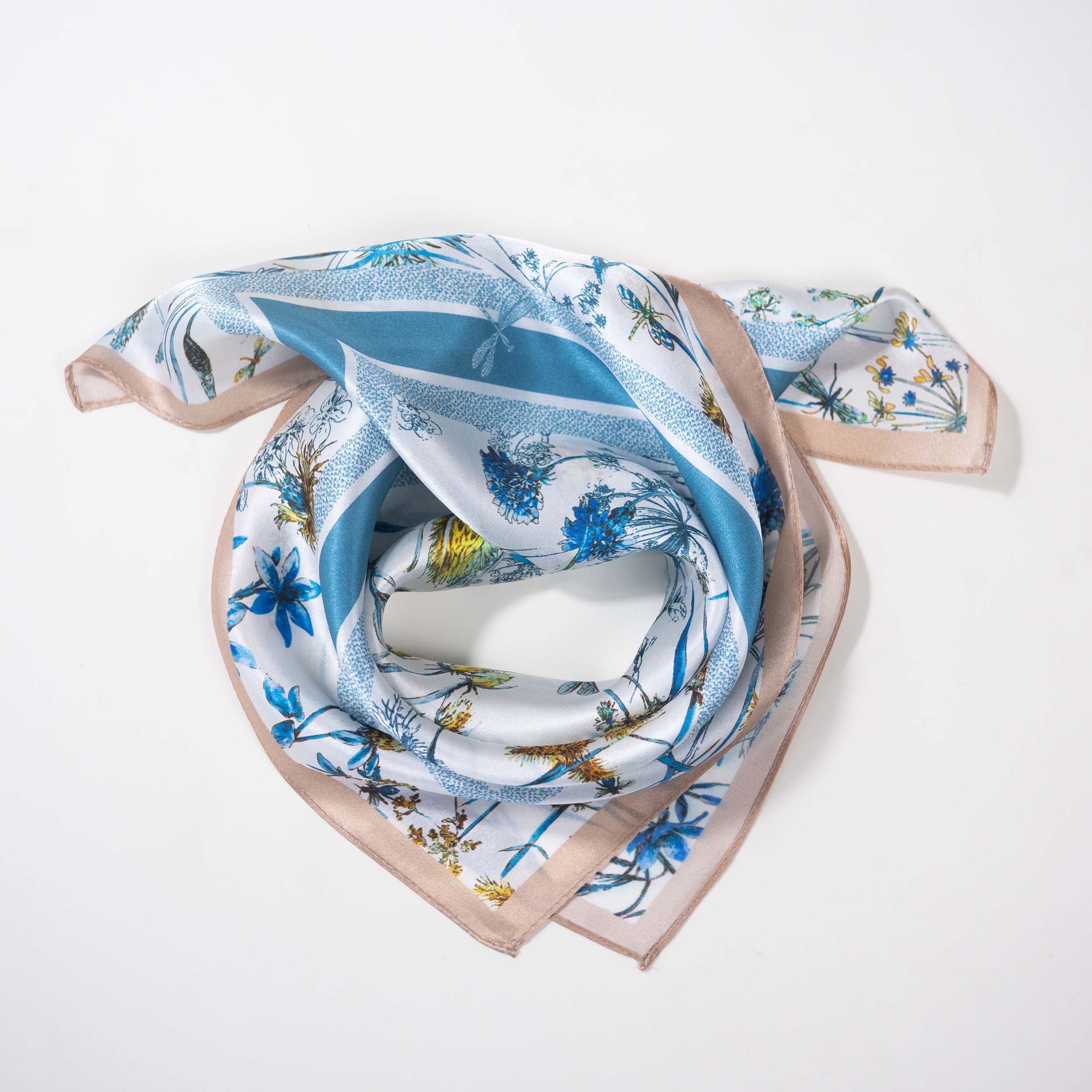
- Finished dimensions, stated as finished. Hand-rolled edges absorb more fabric than a machine-stitched double fold, so this matters more on silk than on cotton.
- The weave, not only the word “silk.” It decides the drape and how the knot sits.
- Weight in momme. Lighter silk folds into a smaller knot; heavier silk holds a shape.
- Print sides. Single-sided printing shows the reverse wherever the square is folded or knotted.
That last one is not hypothetical. A buyer came to us for 90 × 90 cm silk twill scarves at 16 to 19 momme, hand-rolled edges, printed both sides, for overnight wear with textured and protective hairstyles as well as fashion use. We told her our digital printing is single-sided before quoting, then sent the quotation on that basis. The reverse of a knotted square is on display, so raise this before production rather than after.
This is how we match the effect a buyer describes to a fabric:
| Desired effect | Fabric direction |
|---|---|
| Smooth, glossy, fluid | Satin-weave Mulberry silk |
| More structure, clearer print | Silk twill |
| Airy and transparent | Silk chiffon or georgette |
| Soft drape, less shine | Silk crepe de chine |
| Soft, relaxed, matte | Sandwashed crepe de chine or charmeuse, confirmed by sample |
We build custom silk scarves to buyer-specified dimensions and material specifications, recording the confirmed composition, weave, momme, and print in the quotation, sample approval, or order specification. If you are ordering a custom square, send the finished side length, the fold and use it has to survive, and a reference square you own with its measured side. That last item resolves more sizing conversations than any chart. It is also worth reading how silk shrinkage and care affect whether a finished size stays a finished size. If you already have a size in mind, discuss your scarf dimensions with us and we will tell you what the fold will cost you first.
Frequently Asked Questions
How much fabric do you need to sew your own bandana?
Work backward from the finished square and add the hem. One common narrow-hem method starts with a 23 × 23-inch cotton square and turns every edge inward twice at ¼ inch each time, which leaves a finished square of 22 × 22 inches (Sew4Home flat bandana method).
The rule is cut size = finished size + (4 × hem width), because each of the two opposing edges is folded twice. A ¼-inch double hem costs you an inch; a ⅜-inch double hem costs an inch and a half. Hand-rolled silk hems take a similar allowance but are easier to judge from a sample, so we cut a test square first on silk.
Which dimensions matter for a triangle bandana?
Three, and sellers rarely label them clearly. Here are the dimensions of one we have produced, for reference: 83 cm across the long top edge, about 42 cm from that edge down to the point, and 59 cm along each sloping side.
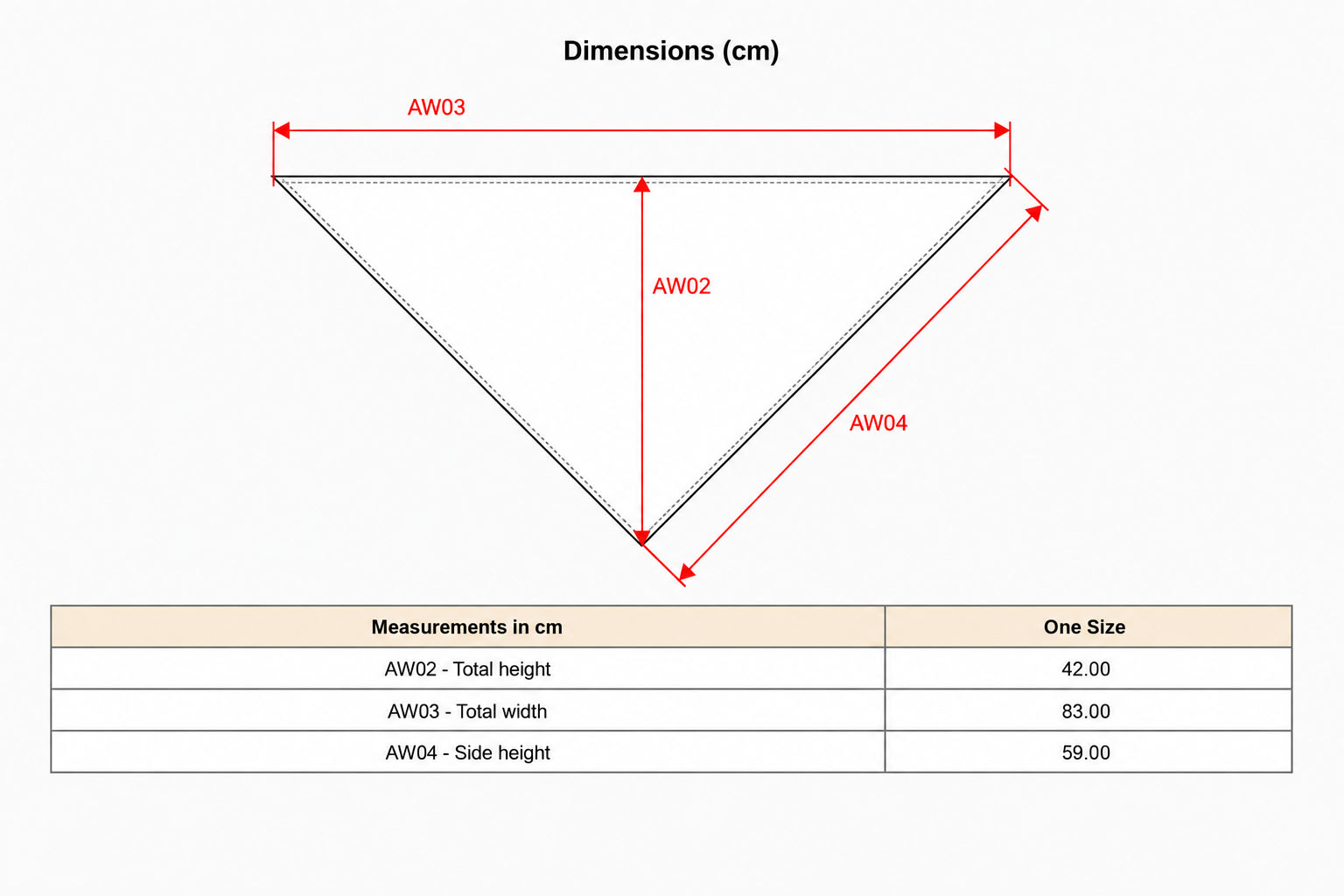
Compare the long top edge against your measured circumference plus knot allowance. That edge is what wraps around you, while the depth only tells you how far the point hangs. Watch which number a seller calls “the size”: a 22-inch square folded into a triangle gives a long edge of about 31 inches, so an 83 cm triangle is close to a folded standard square, not to a flat 22-inch one.