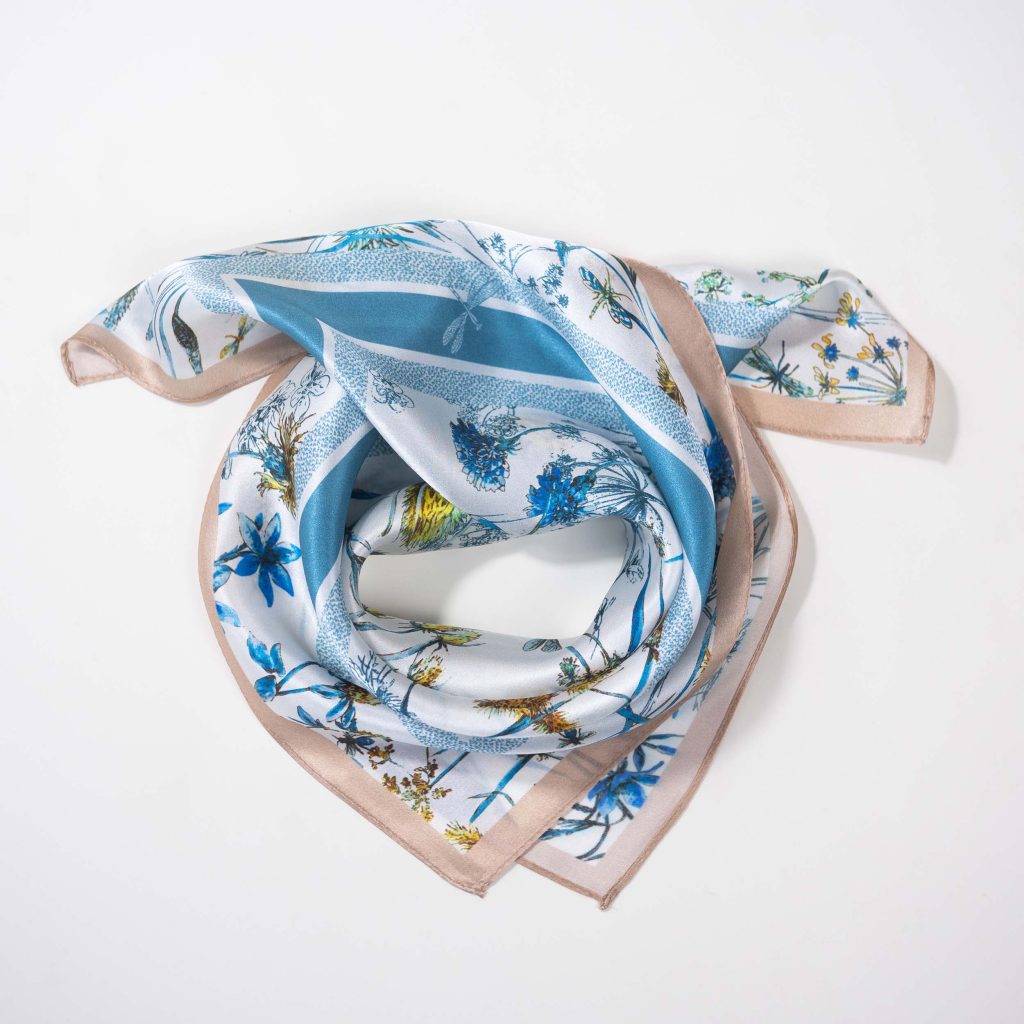
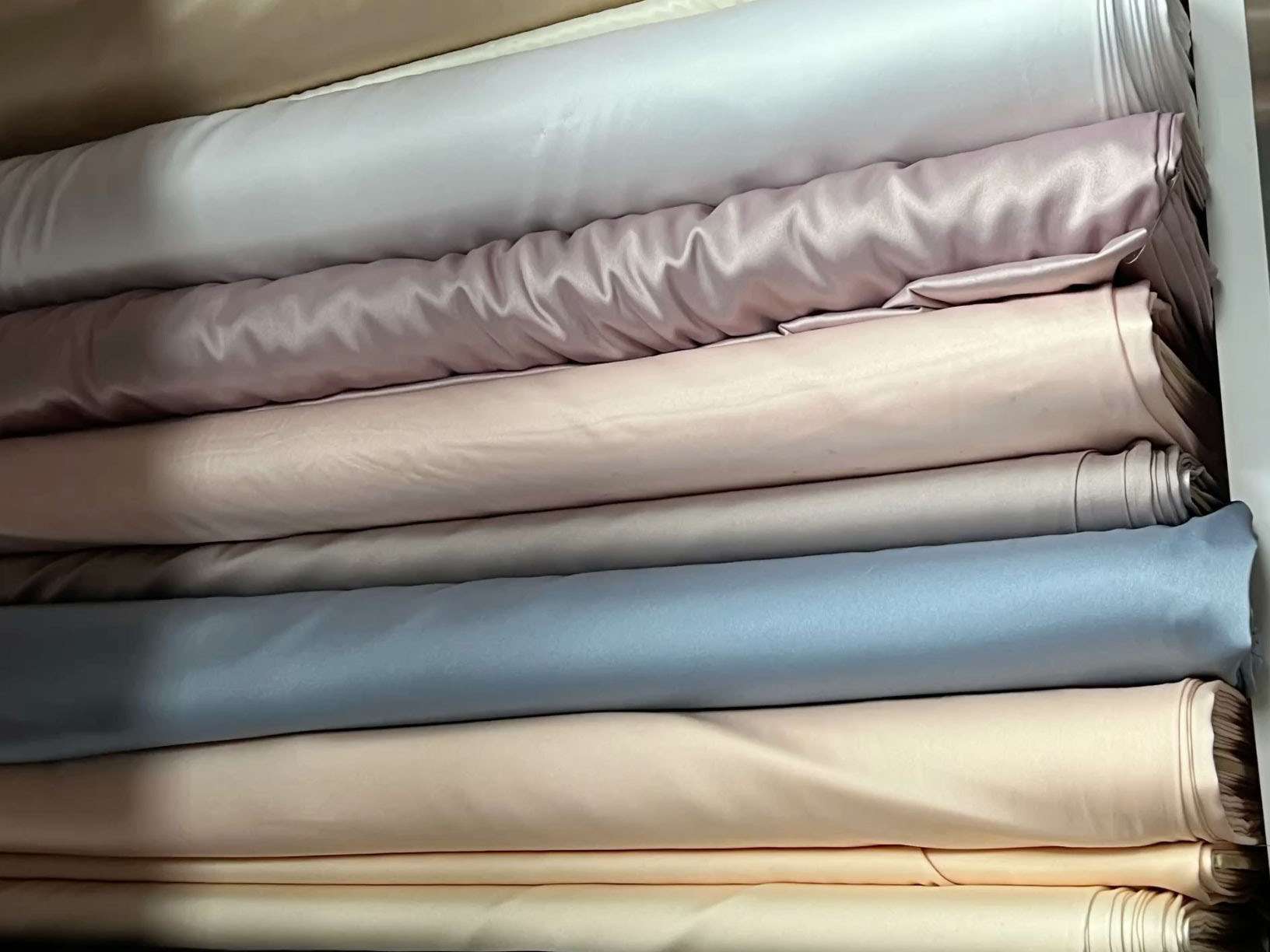
Search for silk fabric today and you will find 5-momme habotai at USD 6.84/m and double-face duchess satin at USD 136.65/m. Both are labeled 100% silk, both are real, and both are currently for sale.
Neither one is “the price of silk.” Those two listings describe different weaves, weights, widths and market levels, and most frustrating silk price comparisons fail at that point, before anyone has looked at the numbers. Retailer greed is rarely the explanation.
We weave and cut mulberry silk in Suzhou, and when buyers ask us how much does silk cost, the most common thing they add is that our quote “doesn’t match the price on the website.” Nine times out of ten they are holding two figures that were never measuring the same thing. So here are the ranges we can defend, with dates attached, and then the method for putting any two offers on the same footing.
Table of Contents
- What silk costs right now: the short answer
- Silk prices by fabric type and momme
- Width and momme: comparing two quotes
- Retail, wholesale and bulk pricing
- Factors that make silk more or less expensive
- How to read a silk quote and avoid false comparisons
- Choosing a silk weight that fits the project
- Frequently Asked Questions
What silk costs right now: the short answer
At US retail, finished mulberry silk fabric generally runs from about USD 6.50 to USD 44 per m, driven mostly by weave and momme, with heavy and specialty satins climbing past USD 109/m. Raw silk trades by the kilogram, so the raw silk price per kilogram is not comparable to a fabric price. Factory pricing for a confirmed specification sits below retail, but it starts at a minimum order quantity rather than a single cut.
That is roughly USD 6.50–44/m (USD 6–40/yd), rising above USD 109/m (USD 100/yd) for the heaviest satins.
Anyone asking how much is silk is really asking about one of three price bases, and the most common mistake we see is averaging them together.
US retail prices
Price snapshot: September 29, 2026.
| Fabric | Momme | USD/m | USD/yd |
|---|---|---|---|
| Silk habotai | 5 | From 6.84 | From 6.25 |
| Silk crepe de Chine | 12 | From 14.71 | From 13.45 |
| Silk charmeuse | 19 | From 26.40 | From 24.14 |
| Silk charmeuse | 22 | From 33.63 | From 30.75 |
| Dupioni, shantung, duchess satin | Various | 43.69–136.65 | 39.95–124.95 |
Width note: Fabric widths are not listed in this table. Confirm the usable width of each fabric before comparing prices per m (or per yd), including comparisons with the factory references below.
Sources: Dharma Trading, NY Designer Fabrics and Stonemountain & Daughter, read on September 29, 2026. Treat every row as a dated snapshot rather than a standing offer.
Factory reference prices
Reference period: September 2026.
| Fabric | Momme | Width | USD/m | USD/yd |
|---|---|---|---|---|
| Silk charmeuse | 19 | 140 cm | 18.4–21.4 | 16.8–19.6 |
| Silk crepe de Chine | 12 | 140 cm | 12.0–14.0 | 11.0–12.8 |
Raw material reference: 20/22D white raw silk was recorded at RMB 423–492 per kilogram on September 15, 2026.
That raw-silk number explains a lot. The fiber for 1 m of midweight silk is a small fraction of a kilogram. Everything between that kilogram and a finished bolt sits in the rest of the price: throwing, weaving, degumming, dyeing, finishing, inspection and waste.
Silk prices by fabric type and momme
Momme (mm) is the weight measure for silk, and it is defined in imperial units: the pounds in a piece approximately 114 cm (45 in) wide by 91.44 m (100 yd) long. Higher momme means heavier and denser cloth, though not necessarily thicker, which is a distinction worth holding onto.
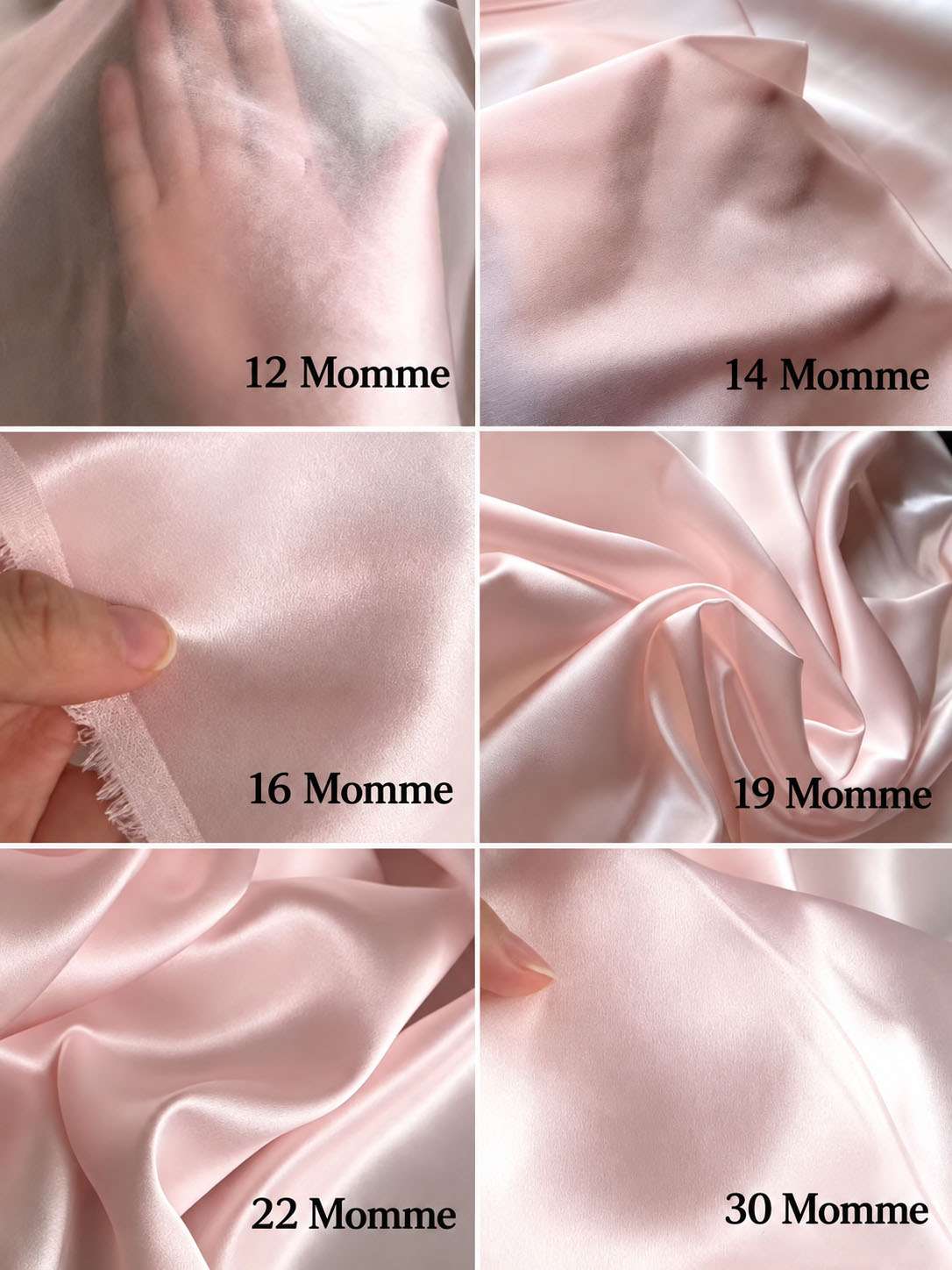
Hold the weave and the width constant and momme behaves predictably. In February 2026 a buyer in Poland asked us for 136 cm (54 in) silk satin and we quoted three weights on the same day, same currency, same EXW terms:
| Momme | Width | EXW USD/m | EXW USD/yd |
|---|---|---|---|
| 16 | 136 cm | 15.86 | 14.50 |
| 19 | 136 cm | 17.43 | 15.94 |
| 22 | 136 cm | 19.90 | 18.20 |
That is a quotation for one customer and one quantity rather than a general list price, but it isolates the variable cleanly: about 25% more money for about 37% more silk, with everything else frozen.
Here are our reference price ranges for silk crepe de Chine and silk twill at the same momme and width:
| Fabric | Momme | Width | USD/m | USD/yd |
|---|---|---|---|---|
| Silk crepe de Chine | 16 | 140 cm | 17.0–19.9 | 15.6–18.2 |
| Silk twill | 16 | 140 cm | 17.2–20.0 | 15.7–18.3 |
Each row is one recorded specification. For a width or momme not listed here, ask for a separate quote.
At the same weight of 16 momme and width of 140 cm (55 in), the reference price ranges for crepe de Chine and twill are very close. Price differences between weaves are generally modest, although specialty fabrics such as Xiangyunsha are an exception.
Width and momme: comparing two quotes
Width matters, and it is the specification buyers most often leave out.
Work through two plausible offers:
- Quote A is USD 17.50/m (USD 16/yd) at approximately 114 cm wide, with an area price of approximately USD 15.31/m².
- Quote B is USD 18/m (USD 16.46/yd) at 140 cm wide, with an area price of USD 12.86/m².
Quote B looks more expensive per m and is roughly 16% cheaper per m². If you are cutting a garment, m² are what you actually consume.
This is why we ask for width before anything else. A buyer comparing a 114 cm bolt against a 140 cm bolt on linear price alone is off by more than 20%, and will often conclude the wrong supplier is overcharging.
Square-meter normalization is the right tool when widths differ and your pattern can use the extra width. It is the wrong tool when it cannot: 20 cm (8 in) falling outside your marker is width you paid for and will throw away. Check your cutting layout before you congratulate yourself on the cheaper m² figure.
For any two quotes, confirm that usable width, momme and weave match, and only then compare.
Retail, wholesale and bulk pricing
Retail silk pricing and wholesale silk pricing describe the same cloth at different quantities. The number changes with how much you take and what service comes with it.
At retail, the ladder is visible on the page. One 114 cm, 19-momme charmeuse we looked at is listed on the site at approximately USD 20.93, 19.31 and 16.74 per m for approximately 0.91–8.23 m (1–9 yd), 9.14 m or more (10+ yd) and a full bolt. That is a 20% spread on an identical fabric, decided entirely by quantity.
Factory pricing works the same way but at a different scale, and with the commercial terms doing more of the work. In that 2026 Polish enquiry, the buyer moved from a single color to three colors at 500 m each. The 16-momme, 136 cm price came down by USD 0.80 per m, just over 5%, because going from 500 m to 1,500 m changes how the warp, the dye lots and the loom time are planned. Sample shipping was quoted separately at USD 30.
The things that move a factory number are not mysterious:
- MOQ. Our standard minimum is 45 m, for custom solid-color and custom printed silk alike.
- Dye-lot size. Custom solid-color orders under 300 m carry a USD 60 small dye-lot fee. At 300 m and above there is no fee. Custom printing has no small dye-lot fee but is quoted only after the fabric, artwork, method, coverage and quantity are confirmed.
- Stock versus custom color. A color we already run is a different commercial proposition from one mixed for you.
- Trade term. EXW, FOB, CIF and DDP are four different numbers for the same cloth. A DDP price that looks 30% higher than an EXW price may be identical once freight, insurance and duty are added back.
- Validity. We hold quotations for about one month, because exchange rates and raw material costs move. A quote from March is a historical document rather than a price.
A retail bolt and a custom production run answer different problems. One gives you 47.5 m (52 yd) of an existing color next week. The other gives you your color, width and momme in a few weeks, against a minimum. Choose by which constraint actually binds you.
Factors that make silk more or less expensive
Is silk expensive? Relative to synthetics, yes. How expensive is silk depends on what happens upstream of anything a weaver does.
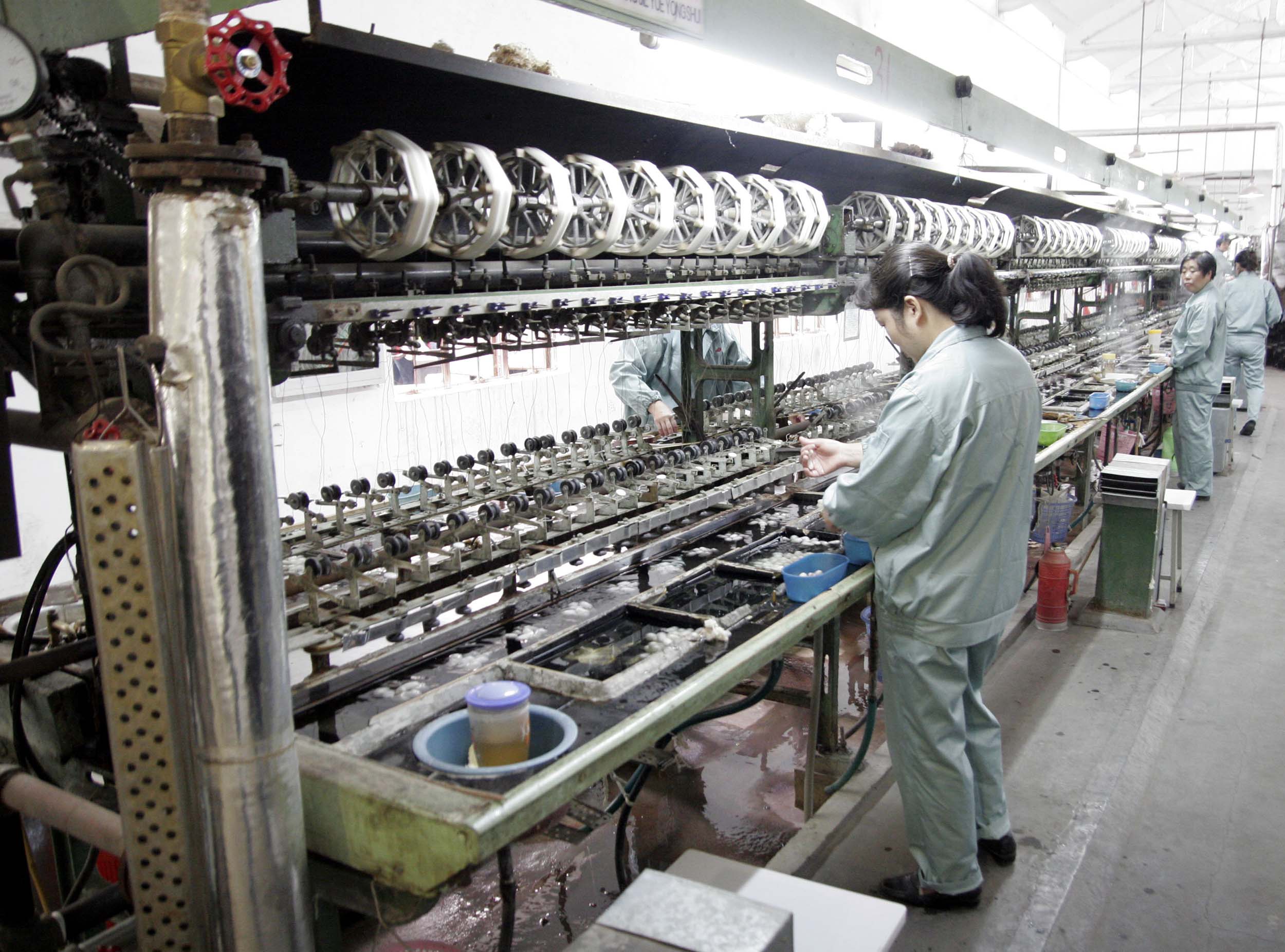
Reeling raw silk is a multi-stage process: raising silkworms, stifling, cooking the cocoons so the filament can be unwound continuously, reeling, re-reeling, skeining and bundling, with several stages requiring sustained thermal energy. The yield arithmetic is unforgiving. Raw silk represents 12–20% of whole fresh-cocoon weight, a cocoon holds roughly 600–1,500 m of filament with about 80% actually reelable, and poor reelability means breakage, downtime and waste. You are paying for a biological crop, a low conversion rate, skilled labor and quality control, all before the yarn reaches a loom.
That explains why silk sits far above mass-produced polyester satin, which is extruded continuously and priced by the tonne. It does not explain the spread within silk.
Inside silk, higher prices come from a mix of more material and more work:
- More material: higher momme, wider usable width, denser construction.
- More processing: printing, sandwashing and other finishes, tighter defect tolerances, specified test reports.
- Smaller scale: short runs, many colors split across a small total, custom dye lots.
- More commercial scope: labels, packaging, logo work, destination and delivery terms bundled into the number.
The last group is why price alone proves nothing about quality. A high figure may buy you a heavier cloth. It may also be the cost of a small quantity, a rush schedule, or an extra margin in the distribution chain. Ask which one you are paying for.

How to read a silk quote and avoid false comparisons
In the Polish enquiry, the buyer had a price from a website and our figures did not match. The reason turned out to be one line neither party had stated out loud: the web price applied to 114 cm fabric, and the buyer was asking for 136 cm. Once we supplied width-specific, momme-specific numbers, the comparison made sense immediately. The cheaper price had never been an offer for what they wanted.
That is the normal shape of this problem. A low number usually belongs to a different specification rather than to a bargain or a trick.
Before you treat two offers as comparable, get all of this on paper:
- Fiber composition and percentage. Silk is a fiber; satin is a weave. Polyester satin, a silk blend and 100% silk satin are three different products that can share a product name, and the cost of 100% silk is the highest of the three. If you need to verify what you have received, there are physical checks that distinguish real silk.
- Weave or construction, momme or GSM, usable width, finish, solid or print, and any named fabric source.
- Quantity by color and specification, MOQ, setup or dye-lot charges, sample and testing costs, packaging, tolerances.
- Currency, price unit, quote date, validity period, trade term.
- Freight, insurance, duty, tax, destination, delivery schedule.
- Supporting evidence: a labeled swatch, color card, available test report, approved sample, and a written order specification.
A quote that is missing width, missing momme, or silent on the trade term is not something to sort out later. Those lines are the comparison.

For anything we specify as 100% mulberry silk, we use 100% 6A-grade mulberry raw silk, and blends are identified separately by their confirmed composition. We record composition, construction, momme or GSM, color or print, and finish in the quotation, sample or order specification, and we do not substitute a lower momme, a different composition or a different construction without the buyer’s approval. That last commitment is worth asking any supplier to put in writing.
Choosing a silk weight that fits the project
The instinct to buy the highest momme you can afford is understandable and usually wrong. Weight is one property among several, and past a certain point you are paying for drape you do not want.
Start from the effect you need:
- Smooth, glossy and fluid: satin-weave mulberry silk, commonly ordered at 16, 19, 22, 25 and 30 momme.
- Soft drape with less shine: crepe de Chine. Sandwashed crepe de Chine or charmeuse goes softer and more matte again.
- Body, structure and crisp print definition: silk twill.
- Sheer or layered: chiffon or georgette, with coverage or lining confirmed early.
- Linings and lightweight underlayers: habotai.
By product, the patterns are consistent. For silk pillowcases, 19 and 22 momme are the two options customers order most. For scarves, the choice is driven by the finish you want: satin for gloss and fluidity, twill for structure and print clarity, chiffon or georgette for transparency, crepe de Chine for softer drape. For apparel, the same effect-based logic applies, guided by a physical sample, size chart, pattern, tech pack or a clear reference image.
Where you can genuinely economize without changing the fiber:
- Choose the correct lighter weight rather than defaulting upward.
- Use a stock color instead of a custom dye lot, or cross the 300 m threshold where the small dye-lot fee disappears.
- Buy a full bolt rather than cut yardage if your project consumes one.
- Consider deadstock for one-off projects. It can save real money, but inventory is finite and you cannot reorder it.
And for anything consequential, get a swatch first. Drape, coverage, surface and color are not reliably judged from a screen, and a swatch costs a fraction of a wrong bolt.
If you have a specification in mind and want a quantity-tiered price, send us the details: composition, momme, width, quantity, colors and destination. If you are still deciding between constructions, the full fabric range is a better starting point than a price list.
Frequently Asked Questions
Is silk sold by weight, meter, or yard?
Both, but at different stages. Raw silk, meaning the reeled fiber before it becomes cloth, is traded by the kilogram or ton. Finished fabric is sold by the meter (or yard in the US), and its weight is described by momme rather than priced by the kilogram. When someone quotes you a price per kilogram for a dress fabric, you are looking at a fiber or greige-goods reference rather than a bolt you can cut into.
Are silk swatches and samples free?
For standard materials we already hold, fabric swatches, color cards and available test reports are free; you may still pay the delivery cost. A made-up product sample is different. Small items such as scrunchies or eye masks are usually free with the buyer covering shipping, while a silk garment sample is quoted by style because someone has to cut and sew it. Asking for a swatch before you commit to meterage is almost always cheaper than discovering the hand or the color is wrong after bulk.
Is silk cheaper if you buy directly from China?
Yes, buying from China is usually cheaper, because you are purchasing at a factory or wholesale level rather than from a cut-yardage retailer. Just watch the conditions that come with it: you pay freight and import duty yourself, and the lead time covers production plus sea transit, so the fabric takes longer to reach you. For a 2 m project a US retailer is almost always the cheaper route once you count shipping. For a repeatable specification in the hundreds of meters, the factory route is where the difference shows up.